Install StreamAlive for your PowerPoint slides
Learn more

Behavioral Science Practices Training for Corporate Trainers
StreamAlive helps 9x the audience engagement in your Virtual Instructor-led Trainings (VILT) directly inside your powerpoint presentation.
Make your instructor-led Behavioral Science Practices training more fun with polls, word clouds, spinner wheels and more
Works inside your existing PowerPoint presentation
Install the StreamAlive app for PowerPoint and see your slides come to life as people participate in your interactions
AI generates audience interactions for you
Let our AI scan your presentation and automatically come up with relevant questions based on the content. Or spend two hours coming up with your own questions, your choice!
Built to work with MS Teams and Zoom
Native apps for Teams and Zoom so you never have to leave your existing workflows
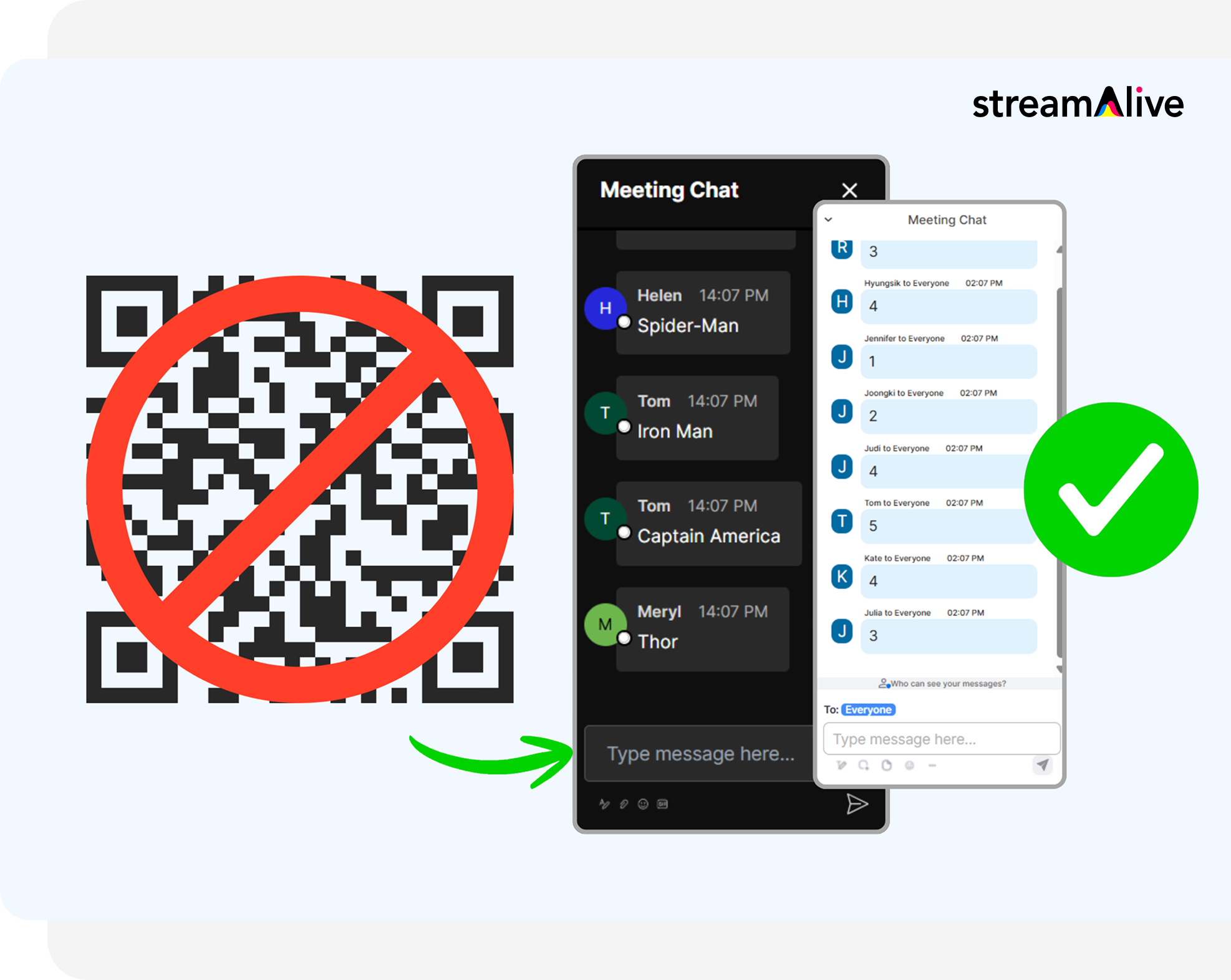
No QR Codes
Chat-powered interactions means your audience doesn’t need to scan QR codes or look at another screen to participate. They just type in the chat!
Quickly approved by your IT team
StreamAlive’s apps for Teams and Zoom means that they have been through rigorous quality assurance and client safety reviews. You’ll find everything an IT team needs to approve the app within the organization within your StreamAlive account.
Youve been asked to run an instructor-led session on Behavioral Science Practices for corporate trainers-and you want it to be practical, not a snooze-fest. The easiest way? Make people participate early and often. Here are StreamAlive-powered ideas to keep engagement high (and yes, it can feel like 9x more energy in the room).
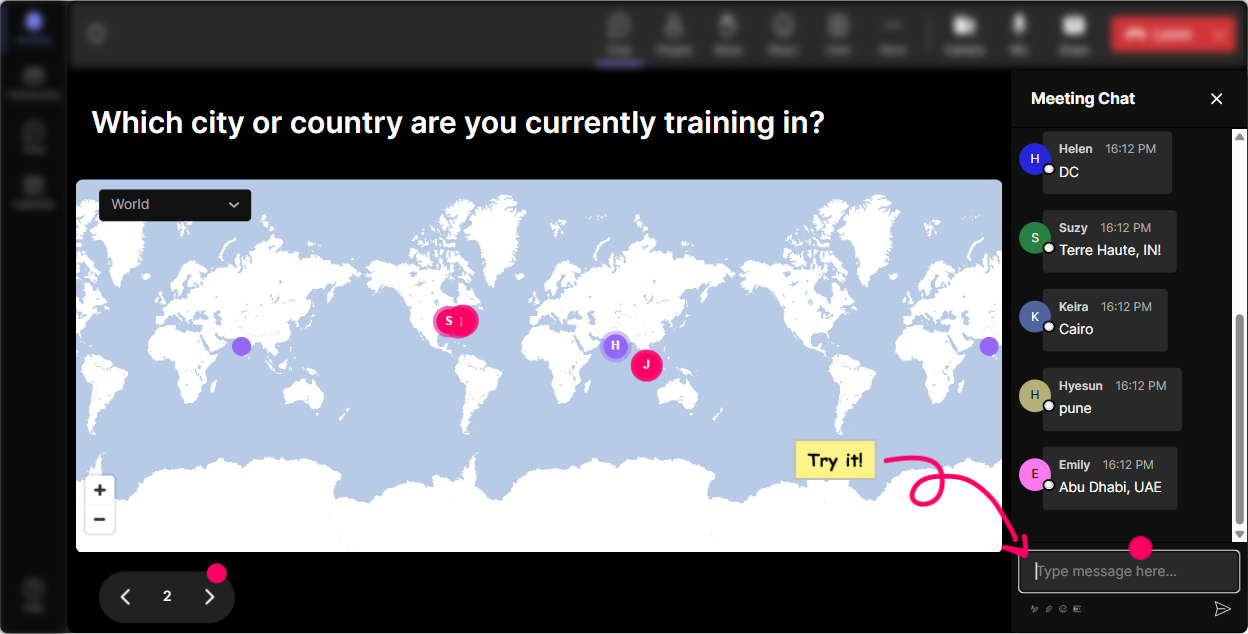
Magic Maps: start with were in this together energy
Behavioral science is all about context-and your audiences context starts with where they are. Magic Maps is a super-easy opener that gets everyone typing in chat within the first 60 seconds. How to use it in *Ideas for Behavioral Science Practices instructor-led training for Corporate Trainers*: - **Icebreaker that actually matters:** Where are you joining from-and whats one behavior youre trying to change at work right now? (Ask for location in the map, then have them add the behavior right after in chat.) - **Nudge theory tie-in:** If you could nudge one city on this map to adopt a healthier habit, which city would it be? (Location only for the map; use the discussion to bridge into nudges.) - **Culture + behavior connection:** Which city has shaped your leadership style the most? Trainer tip: If youve got a huge group, let attendees enter **one location only** so the map stays clean. Then call out clusters: Wow-big cluster in Toronto. Trainers in Toronto, whats the hardest behavior to shift in your org?
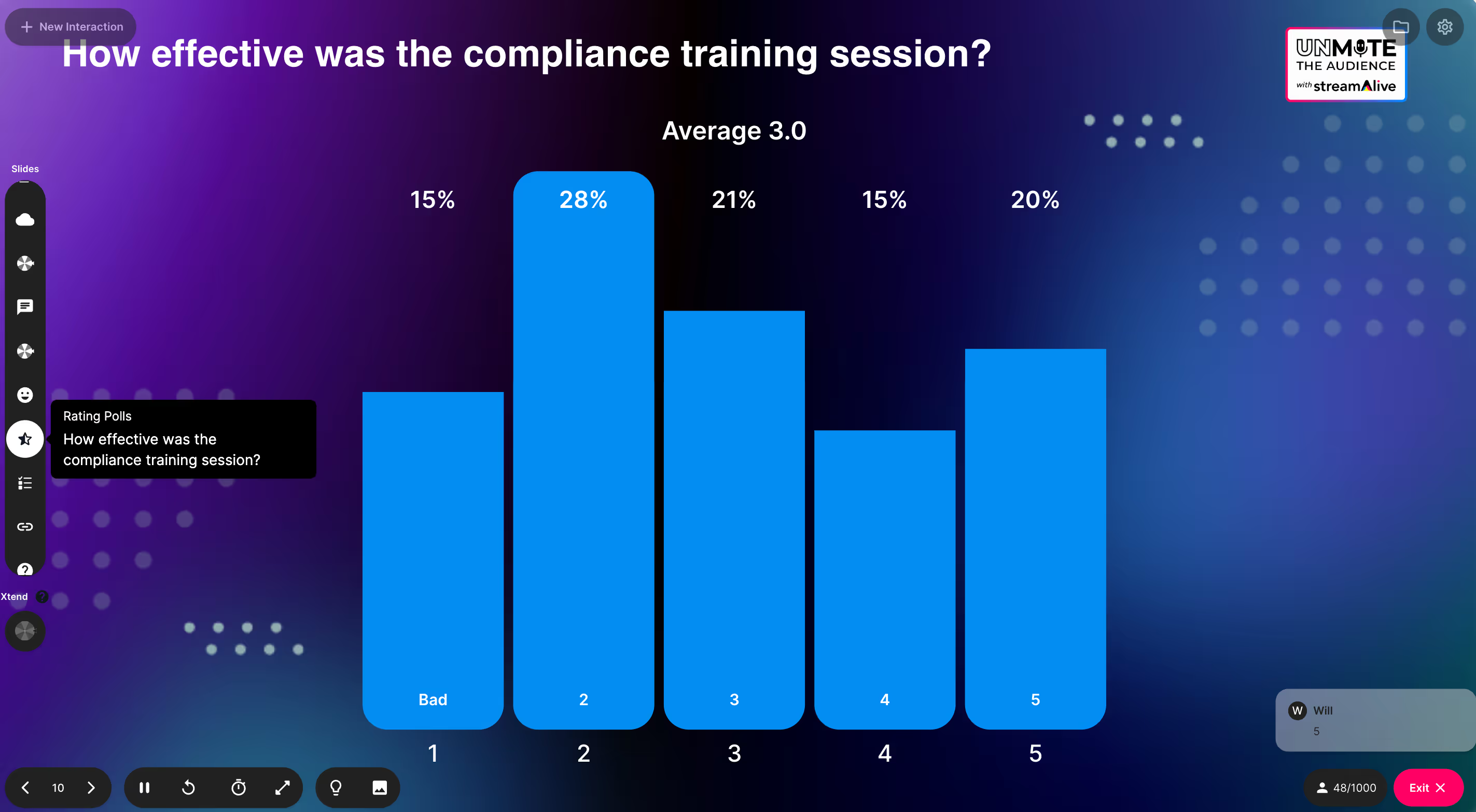
Rating Polls: quick pulse-checks that guide your pacing
Rating Polls are perfect for behavioral science because youre constantly checking readiness, confidence, and beliefs-aka the stuff that drives behavior. Ways to use it during the session: - **Kickoff baseline:** On a scale of 110, how confident are you in using behavioral science in your training design? - **After introducing a model (like COM-B or EAST):** Rate this model for how practical it feels for your next workshop (110). - **Mid-session reality check:** How likely are you to test ONE behavior-change tweak in the next 7 days? Trainer tip: When you see the scores live, narrate what youre going to do next: Okay Im seeing a lot of 46. Im going to slow down and give you a concrete example before we move on. That right there builds trust-and attention.
Wonder Words (Word Cloud): make attitudes visible in seconds
Behavioral science training gets way more interesting when you surface what people *really* think. Word Cloud does that fast-and it gives you instant language to work with. Prompts that work really well: - **Emotions + expectations:** In 12 words: how do you feel about applying behavioral science at work? (Youll get words like *curious, skeptical, excited, overwhelmed*-gold for facilitation.) - **Friction finder:** Whats the biggest barrier to behavior change in your org? (12 words) (Expect: *time, leadership, habits, culture, incentives*.) - **Trainer-focused:** What do your learners struggle with most? (12 words) (Great setup for designing interventions.) Trainer tip: Use Combine Similar Answers so *skeptic* and *skeptical* dont split the vote. Then point at the biggest word and say: Lets tackle THIS one first.
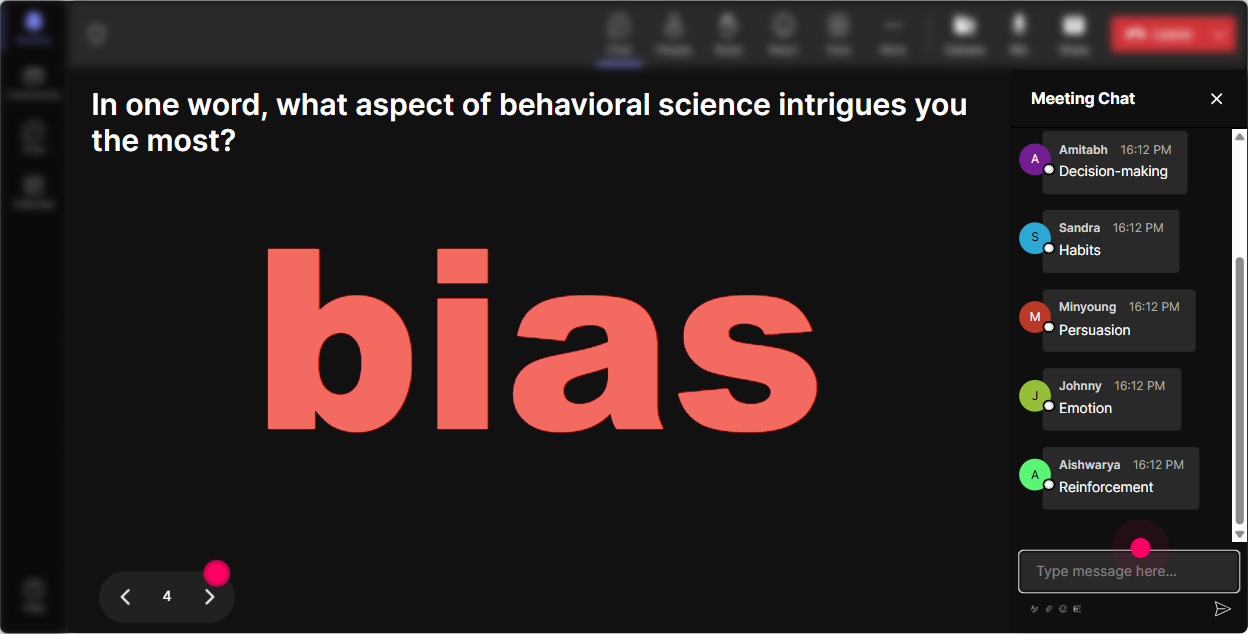
Talking Tiles: turn silent thinking into visible, shareable insights
Talking Tiles is awesome when you want more than a one-word answer-especially for reflection, examples, and real workplace stories. The Tetris-style visual also makes the chat feel alive. Use it for: - **Behavior diagnosis:** Describe a real behavior you want to change in your learners (what they do now vs. what you want instead). - **COM-B practice:** Pick ONE behavior at work. Is the biggest issue Capability, Opportunity, or Motivation-and why? - **Nudge brainstorming:** Whats one small change (a nudge) you could make to improve completion of training or compliance behaviors? Trainer tip: After 1015 responses, pause and theme what youre seeing: Im noticing a lot of Motivation issues, not Capability. That changes what we design. People feel heard-and they stay engaged.
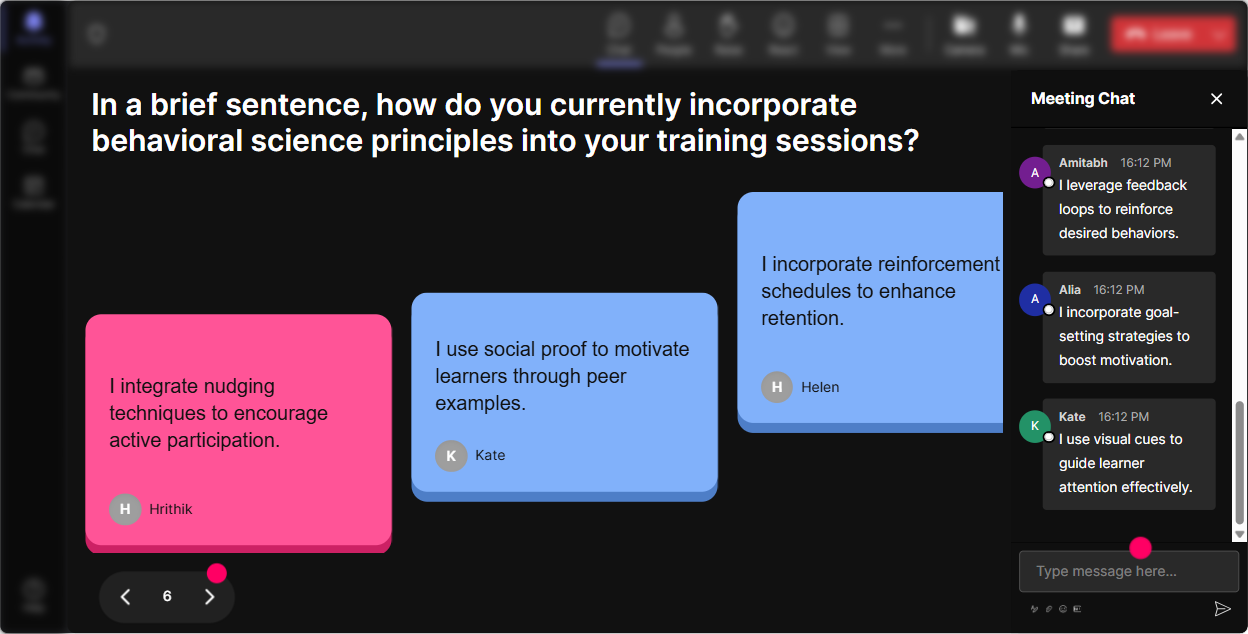
Power Polls: let the audience choose the path (and feel ownership)
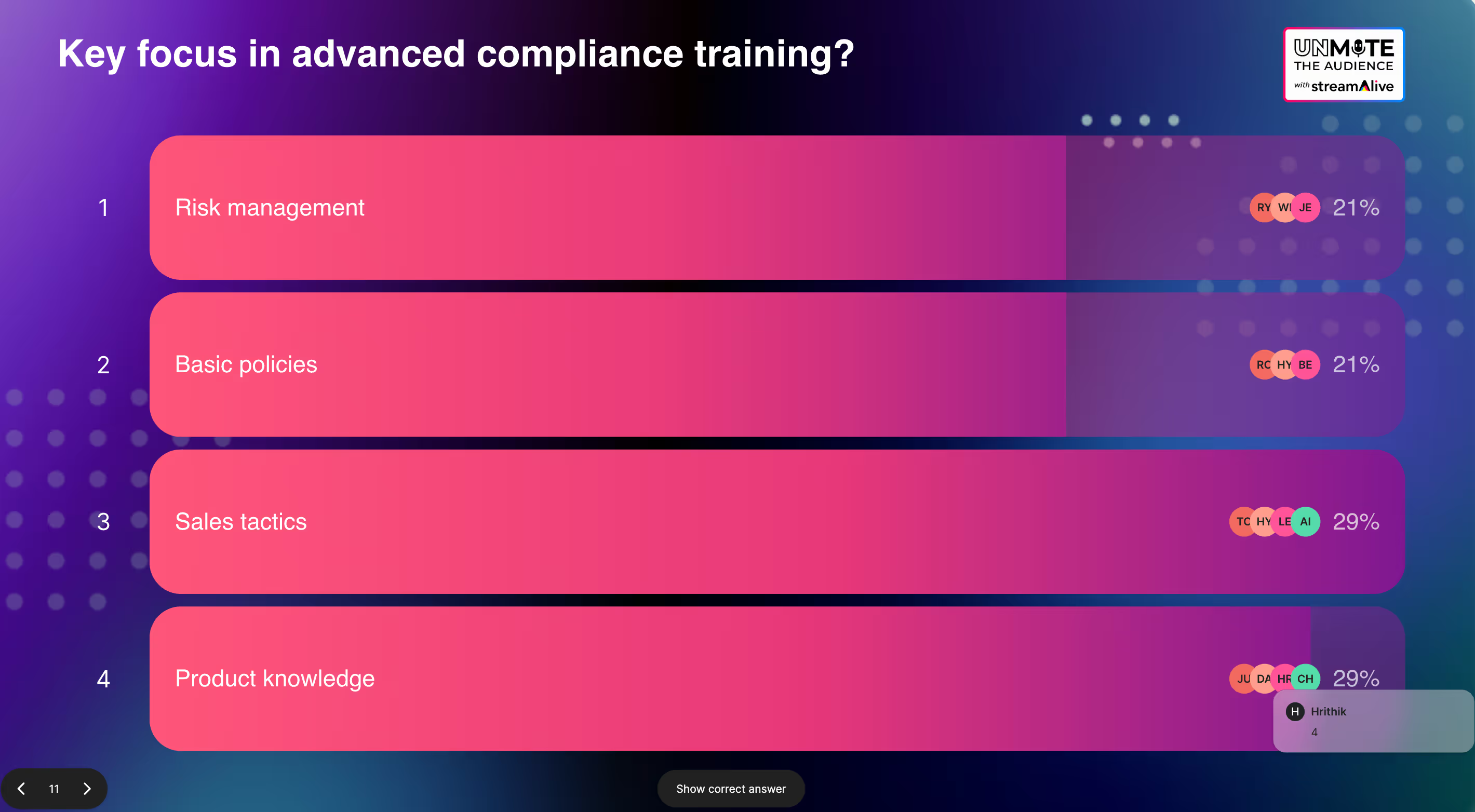
Power Polls are great for steering the session based on what trainers actually need-without you guessing. You can run them with options (clean and quick) and show results live. Poll ideas for this training: - **Choose the focus:** What do you want more of today? 1) Nudges & choice architecture 2) Habit formation 3) Biases that affect learners 4) Designing behavior-based interventions - **Case study selection:** Which scenario should we solve together? 1) Low participation in live training 2) Managers not coaching after training 3) Compliance behaviors slipping 4) Sales training not sticking - **Decision test:** Which lever would you try first to change a behavior? 1) Incentives 2) Environment/constraints 3) Social norms 4) Prompts/reminders Trainer tip: When the poll result wins, commit to it out loud: Alright, nudges win. Well spend the next 15 minutes building nudges you can use next week.
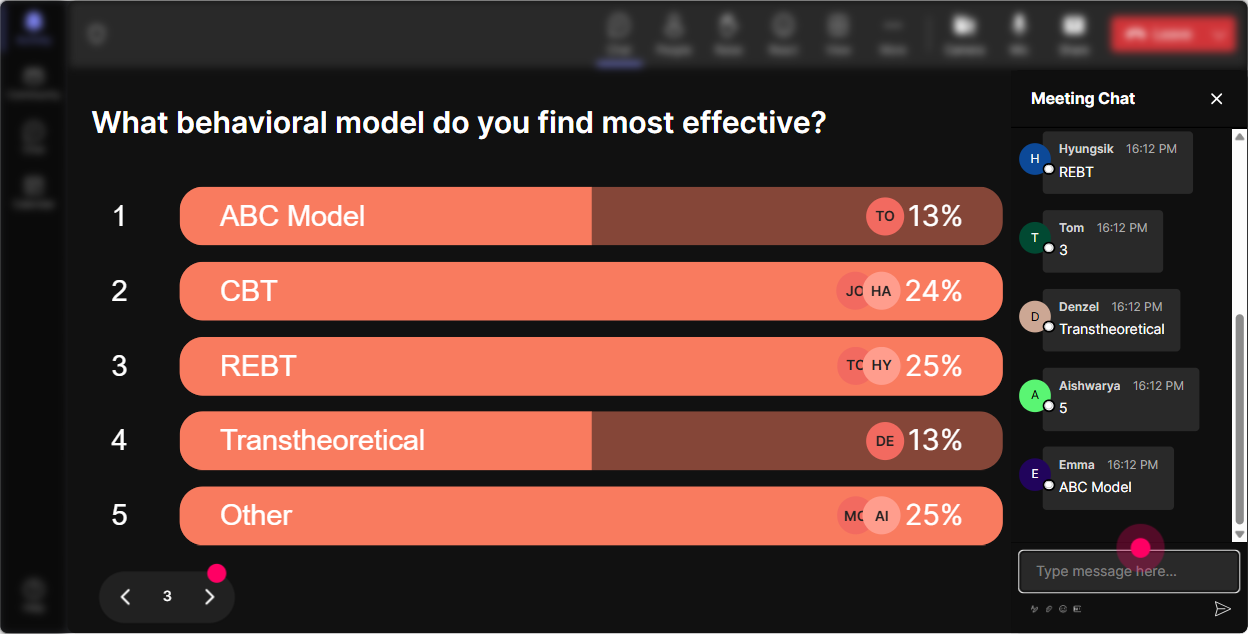
Winner Wheel (Spinner): get volunteers without the awkward silence
You know that moment: you ask a question and everyone suddenly becomes very interested in their mute button. Winner Wheel fixes that in a fun, fair way-because it picks from people who actually participated. Ways to use it here: - **Case sharing:** Drop a behavior challenge youre facing in chat. Im going to spin the wheel and the winner shares for 30 seconds. - **Debiasing discussion:** Type A or B for which intervention youd choose. Ill spin and ask someone from the voters to explain why. - **Micro-coaching moment:** Share one nudge idea in chat. Wheel picks someone and well refine it together live. Trainer tip: Set expectations so it feels safe: You can pass if you want-no pressure. This is just to keep us moving and learning from each other.
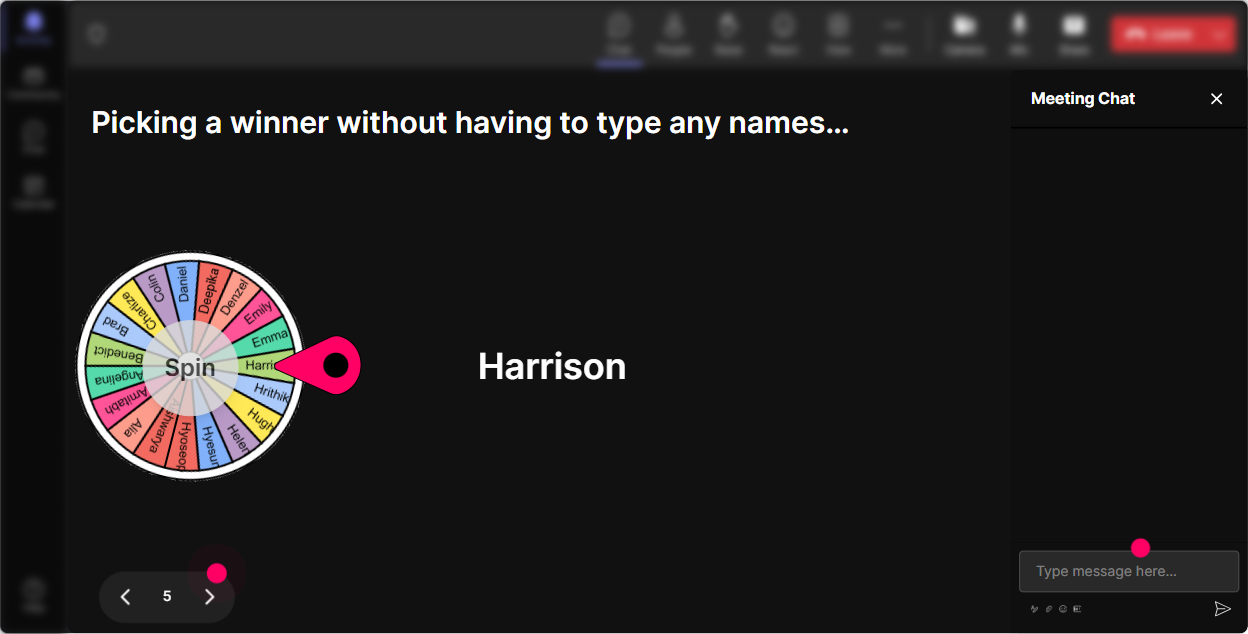
Quiz: quick knowledge checks that dont feel like school
Quizzes work beautifully in behavioral science training because you can test misconceptions and then reveal the why behind the right answer. Quiz questions you can use (multiple choice, one correct): - **Nudge basics:** Which is the best example of a nudge? A) Mandating training with penalties B) Changing the default option to the desired behavior C) Longer reminder emails D) Adding more policy text - **Bias check:** Which bias best explains why people stick with the current process even when its inefficient? A) Confirmation bias B) Status quo bias C) Availability heuristic D) Fundamental attribution error - **COM-B:** In COM-B, Opportunity mostly refers to A) Personality traits B) External factors and environment C) IQ and skill level D) Rewards only Trainer tip: After you reveal the correct answer, immediately ask: Where do you see this in your workplace? Thats where learning sticks.
Rating Polls: quick pulse-checks that guide your pacing
Rating Polls are perfect for behavioral science because youre constantly checking readiness, confidence, and beliefs-aka the stuff that drives behavior. Ways to use it during the session: - **Kickoff baseline:** On a scale of 110, how confident are you in using behavioral science in your training design? - **After introducing a model (like COM-B or EAST):** Rate this model for how practical it feels for your next workshop (110). - **Mid-session reality check:** How likely are you to test ONE behavior-change tweak in the next 7 days? Trainer tip: When you see the scores live, narrate what youre going to do next: Okay Im seeing a lot of 46. Im going to slow down and give you a concrete example before we move on. That right there builds trust-and attention.
Q&A (Quick Questions): catch every question without losing the flow
In a lively session, questions fly by in chat-and you miss the good ones while youre teaching. StreamAlives Q&A pulls questions out of the chat and organizes them so you can actually run a clean discussion. How to use it during this training: - **Parking lot that isnt messy:** If youve got a question, just type it normally in chat-StreamAlive will capture it. - **Dedicated Q&A breaks:** After each module (Biases / Nudges / Habits / COM-B), open Q&A and answer the top 35. - **Make it interactive:** Upvote in chat: which of these questions should we tackle next? (Then answer in order of interest.) Trainer tip: Call out names when answering: Love this question from Priya That tiny moment boosts participation fast.

Analytics: prove what worked (and improve the next session)
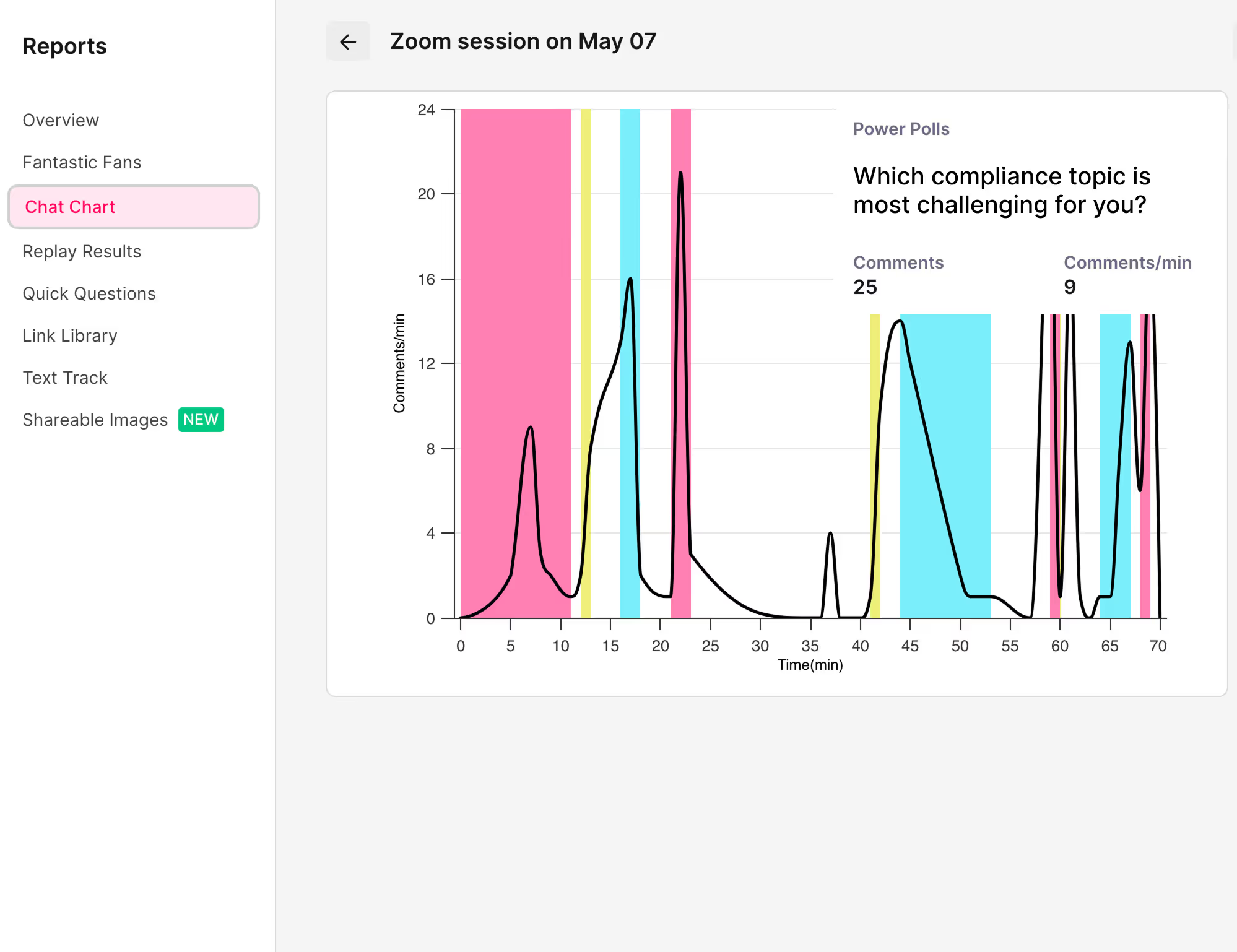
After your Behavioral Science Practices session, StreamAlive Analytics helps you see exactly where engagement spiked, where it dipped, and which interactions actually pulled people in. What you can do with it: - **Minute-by-minute engagement:** Spot the exact moment attention dropped (maybe your theory slide) and where it jumped (maybe your nudge activity). Then tweak your run-of-show next time. - **Interaction reports:** Review poll and quiz results to see what concepts didnt land-and what needs a clearer example. - **Identify your top fans:** Find the most engaged trainers in the room-these are your future champions, pilot group, or co-facilitators. - **Share outcomes internally:** Email the report to your L&D team or stakeholders: Heres what the audience struggled with, heres what they want next. Trainer tip: Use the data like a behavioral scientist: treat each session as an experiment. Keep what worked, adjust what didnt, and watch engagement climb session after session.
Use StreamAlive in all your training sessions
StreamAlive isn’t just for
Behavioral Science Practices
training,
it can also be used for any instructor-led training session directly inside your PowerPoint presentation.
Explore similar traingin ideas: unlocking the potential of StreamAlive
See how StreamAlive transforms live training with engaging events and interactive sessions across industries, directly inside your PowerPoint presentation.

Interactions in action
(it's free)

.svg.png)


