Install StreamAlive for your PowerPoint slides
Learn more

Systemic Thinking Training for L&D Leaders
StreamAlive helps 9x the audience engagement in your Virtual Instructor-led Trainings (VILT) directly inside your powerpoint presentation.
Make your instructor-led Systemic Thinking training more fun with polls, word clouds, spinner wheels and more
Works inside your existing PowerPoint presentation
Install the StreamAlive app for PowerPoint and see your slides come to life as people participate in your interactions
AI generates audience interactions for you
Let our AI scan your presentation and automatically come up with relevant questions based on the content. Or spend two hours coming up with your own questions, your choice!
Built to work with MS Teams and Zoom
Native apps for Teams and Zoom so you never have to leave your existing workflows
No QR Codes
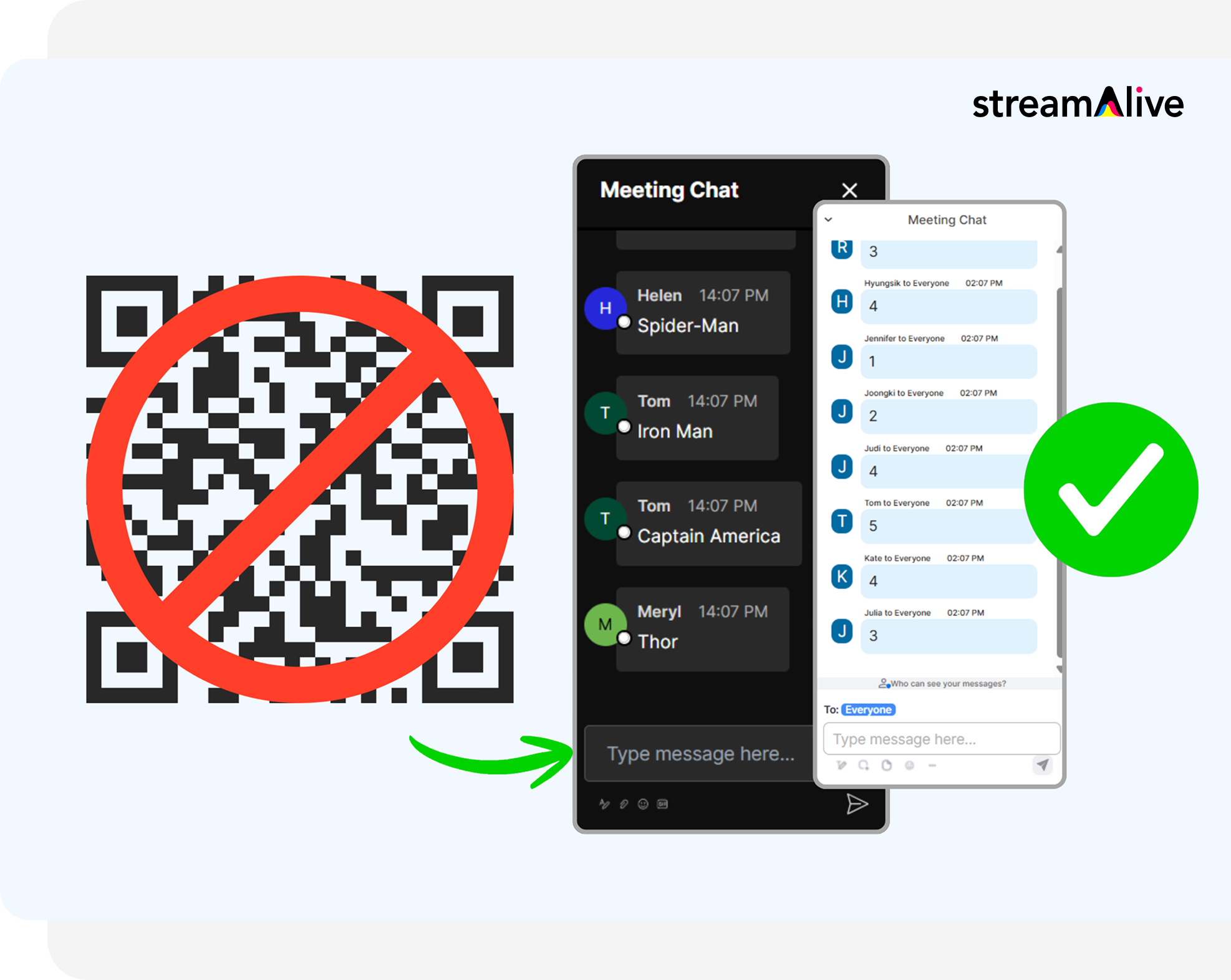
Chat-powered interactions means your audience doesn’t need to scan QR codes or look at another screen to participate. They just type in the chat!
Quickly approved by your IT team
StreamAlive’s apps for Teams and Zoom means that they have been through rigorous quality assurance and client safety reviews. You’ll find everything an IT team needs to approve the app within the organization within your StreamAlive account.

Youve been asked to run a Systemic Thinking instructor-led session for L&D Leaders-and you want it to feel less like a lecture and more like a room full of smart people actually thinking together. Thats totally doable. Here are practical ways to run the session and keep everyone participating (not just listening) using StreamAlive.
Magic Maps: kick off Systemic Thinking with whos in the system?
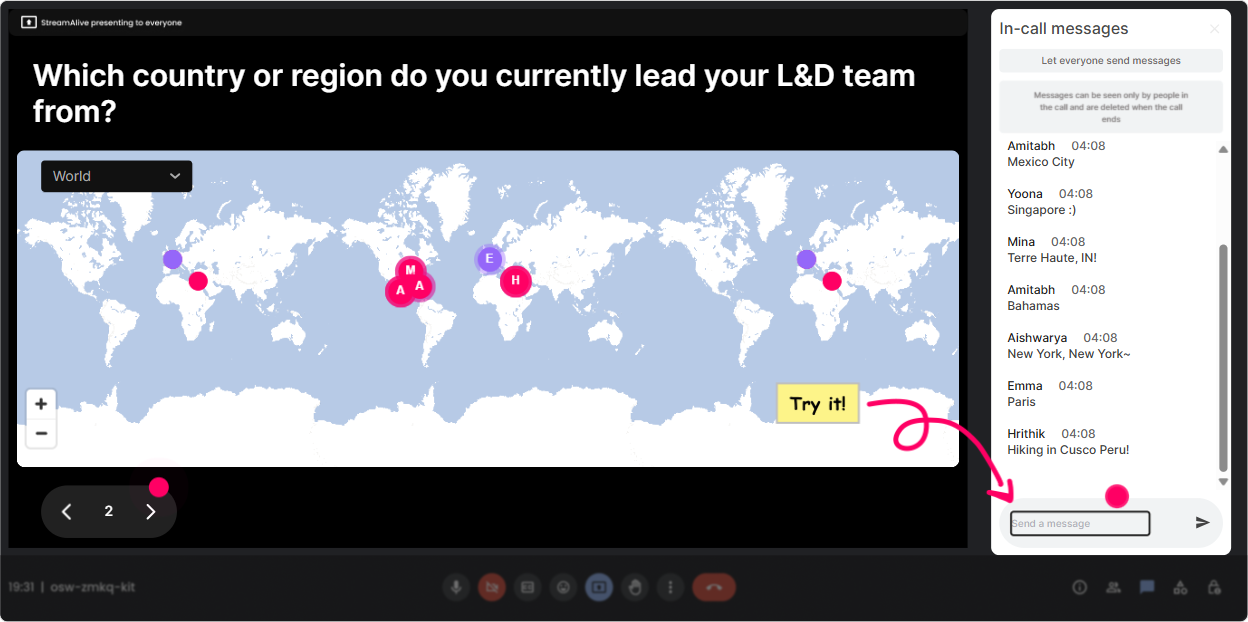
Systemic Thinking is all about connections-so start by making the group feel like a connected network right away. How to use it in your session: - **Classic warm-up (fast + friendly):** Where are you joining from today? Let StreamAlive plot everyone live. Instantly, youve got energy and visibility. - **Tie it to the topic (make it relevant):** Pick a location that represents where decisions get made in your org (HQ, regional office, plant site, customer location). Where is it? Now youre already talking about leverage points and power centers. - **Systems lens icebreaker:** If your org was a place on earth, what city would it be-and why? (People will explain culture, pace, hierarchy, etc.) Trainer tip: If youve got a big global group, call out clusters on the map: Looks like weve got a strong cluster in Singapore-tell us, whats the biggest ripple effect you see in your org when policies change?
Rating Polls: get a quick read on their Systems Thinking confidence
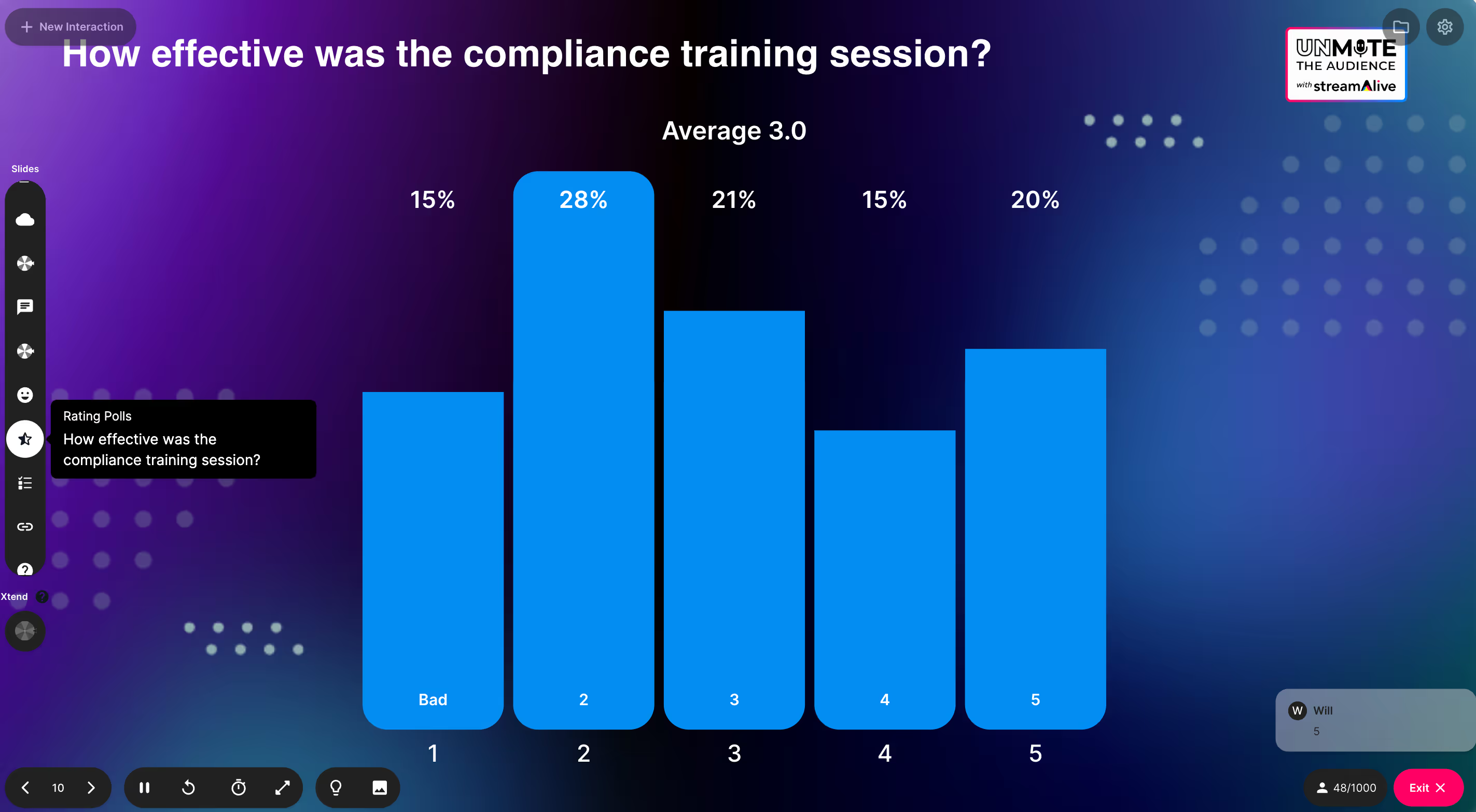
Before you go deep, figure out where the room is. Rating Polls are perfect for that quick pulse check moment. Try these prompts: - **Confidence check:** On a scale of 110, how confident are you in explaining Systemic Thinking to a business leader? - **Maturity check:** Rate your orgs ability to think in systems (1 = siloed, 10 = highly connected). - **Reality check:** How often do you see fixes that backfire in your workplace? (1 = never, 10 = constantly). What this unlocks: you can adjust your pace instantly. If the average is low, spend more time on basics (feedback loops, delays). If its high, jump to tools like causal loop diagrams and leverage points.
Wonder Words: name the vibes (and the friction) around Systemic Thinking
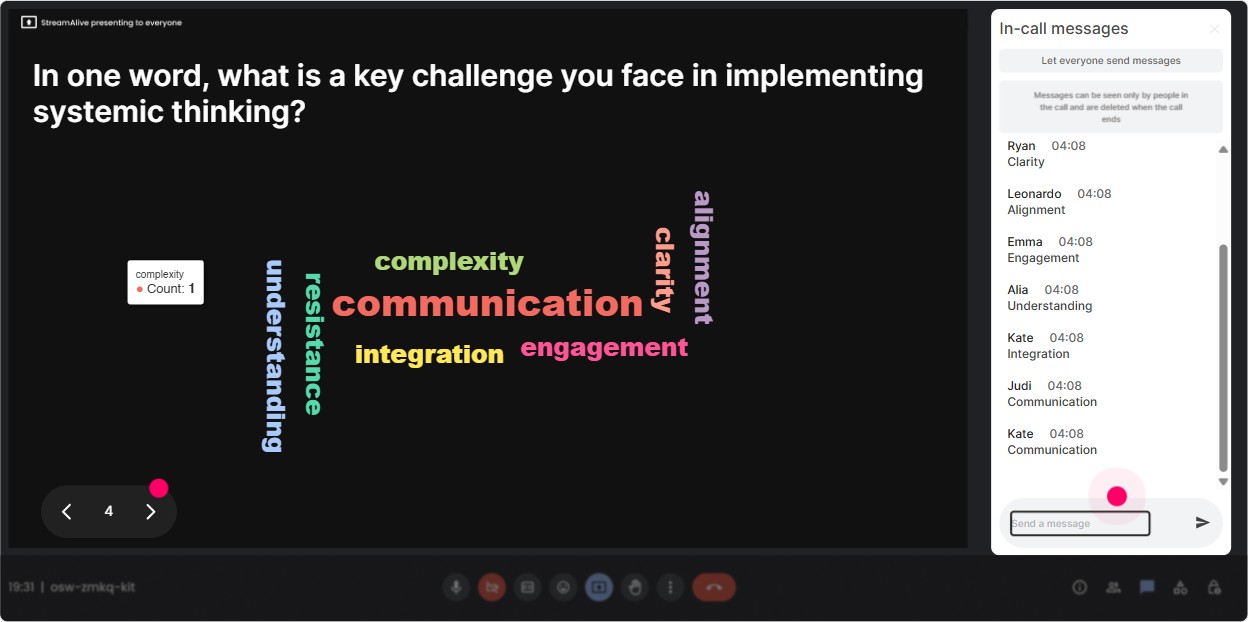
Word clouds are awesome because they surface the groups collective mindset in seconds-and Systemic Thinking sessions are way better when you address the emotional reality too. Ask one of these (keep it 12 words): - **Emotion check:** Systemic Thinking feels (12 words) (Youll see things like complex, refreshing, hard, overdue.) - **Pain point:** Whats the biggest blocker to Systems Thinking in your org? (Words like silos, time, leadership, incentives pop.) - **Training lens (perfect for L&D):** When training fails, its usually because of ____. (This naturally sets you up to talk about system causes vs blaming individuals.) Trainer move: pick the top 23 biggest words and say, Cool-lets design today around these. People instantly feel like the session is for them.
Talking Tiles: turn their real workplace systems into the case study
Talking Tiles is where you get the richer, more detailed answers-the kind you can teach from live. Use prompts like: - **Ripple effects question:** Tell us one decision in your org that creates unexpected downstream impacts. What happens and where? - **Silo story:** Describe a time a local optimization hurt the bigger system (ex: one team hit a metric but it caused a mess elsewhere). - **L&D-specific:** Whats one training initiative that looked good short-term but didnt stick long-term? Why do you think? Then do a live facilitation move: - Group the tiles verbally into themes (incentives, handoffs, delays, ownership). - Pick one story and map it: Okay, lets find the feedback loop here-whats reinforcing the problem? It feels interactive, practical, and honestly a lot more fun than slides.
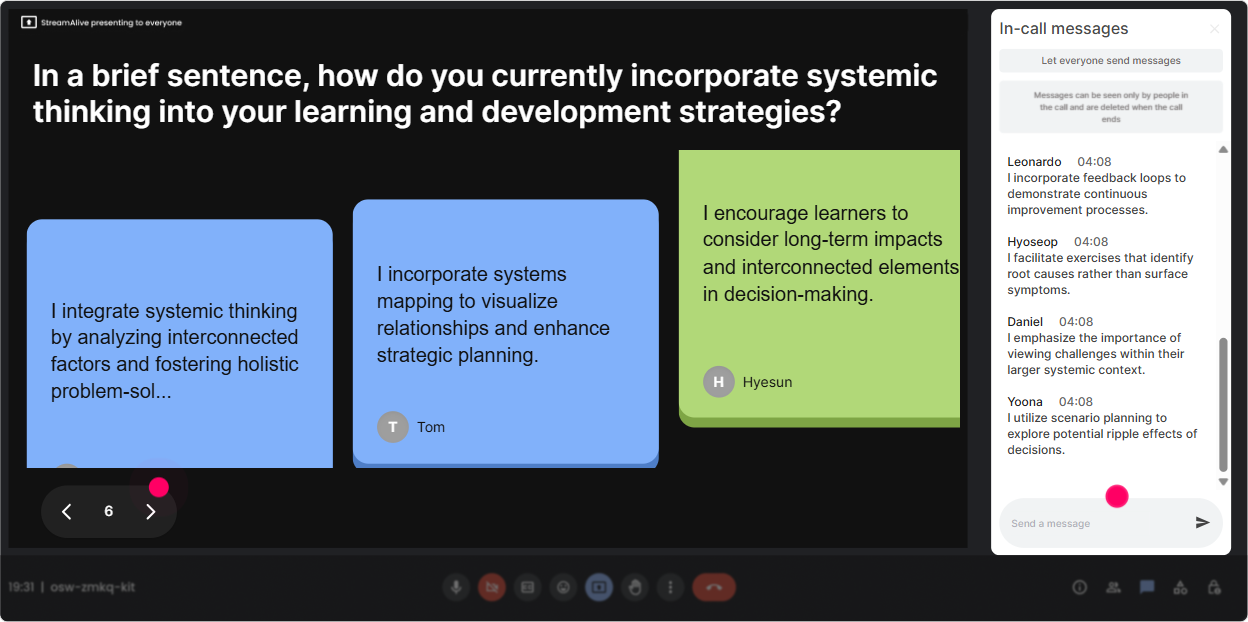
Power Polls: let them choose what part of Systemic Thinking to go deeper on
Instead of guessing what L&D Leaders care about most, just let them vote-and show the results live. Poll ideas (great mid-session pivot): - What do you want to spend more time on today? 1) Feedback loops 2) Systems archetypes (like fixes that fail) 3) Leverage points 4) Mapping stakeholders + incentives 5) Measuring unintended consequences Or do a scenario-based one: - Where does your org most often break? 1) Cross-functional handoffs 2) Prioritization / too many initiatives 3) Change adoption 4) Leadership alignment 5) Capability building / training transfer Trainer tip: After the poll, say: Awesome-looks like archetypes and handoffs are the big ones. Ill adapt the next activity to that. People love seeing you flex in real time.
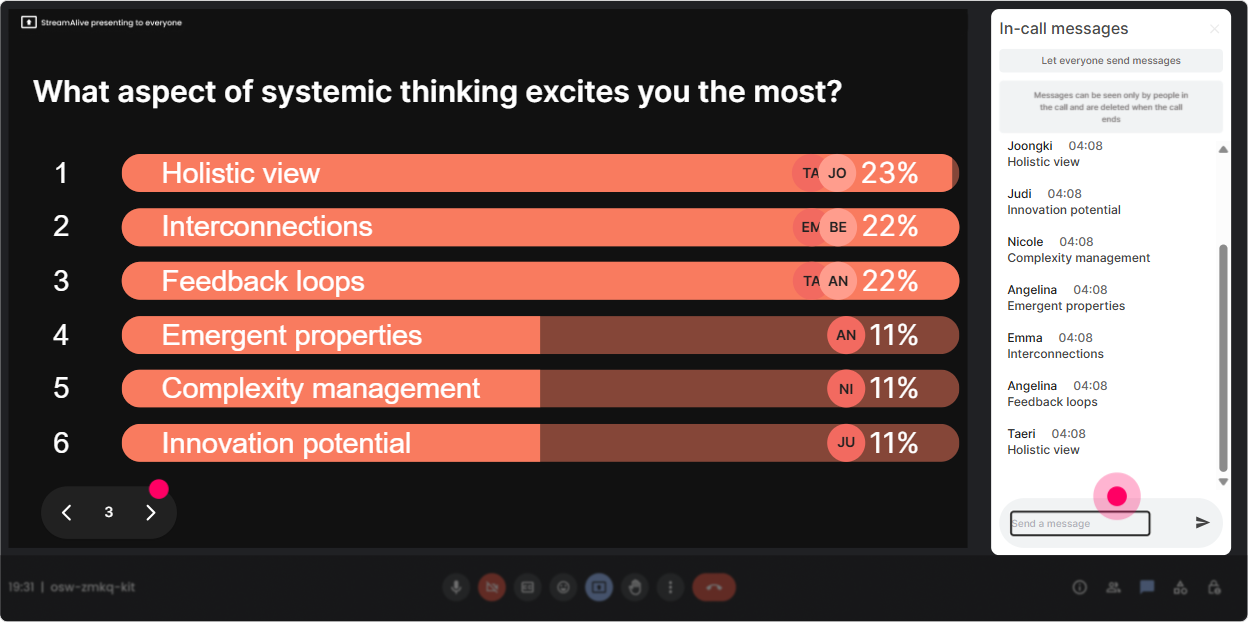
Winner Wheel: make participation feel light (and a little exciting)
Sometimes you want voices, but you dont want awkward silence when you ask, Anyone want to share? The Spinner Wheel fixes that-because its playful and fair. Ways to use it in a Systemic Thinking ILT: - **Volunteer without the cringe:** Drop a word in chat: ME if youre willing to share a system problem youre dealing with. Im going to spin the wheel and pick one. - **Debrief roles:** After a breakout where groups map a system, have them type their group name, then spin: Group B, youre up-what loop did you find? - **Rewards participation:** Well spin at the end and pick a winner from everyone who contributed to the activities. (This nudges chat interaction all session long.) This works especially well with senior audiences-because it keeps things moving without putting people on the spot in a harsh way.
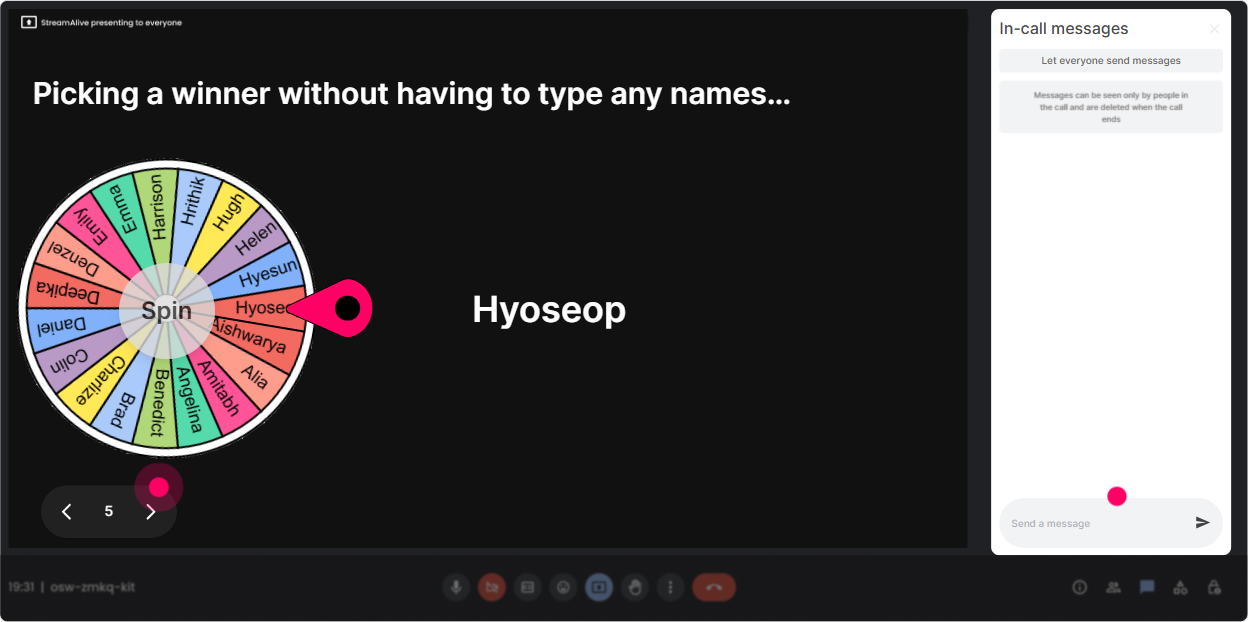
Quiz: quick knowledge checks that dont feel like school
A fast quiz turns I think I get it into Yep, I actually get it. And because answers come through chat, you get way more participation. Sample Systemic Thinking questions (multiple choice, one correct): - **Core concept:** Which best describes a feedback loop? A) A one-time cause-effect event B) A cycle where outputs influence future inputs C) A project plan D) A brainstorming method (Correct: B) - **Delays:** Whats a common reason interventions fail in complex systems? A) Too many meetings B) Delays between action and results C) People dont care D) Lack of tools (Correct: B) - **Archetype check:** In Fixes That Fail, what usually happens? A) The fix solves the root cause B) The fix helps short-term but worsens the problem later C) Nothing changes D) The system becomes simpler (Correct: B) Trainer tip: Use the quiz as a transition: Alright, now that were aligned on loops and delays, lets map one from your world.
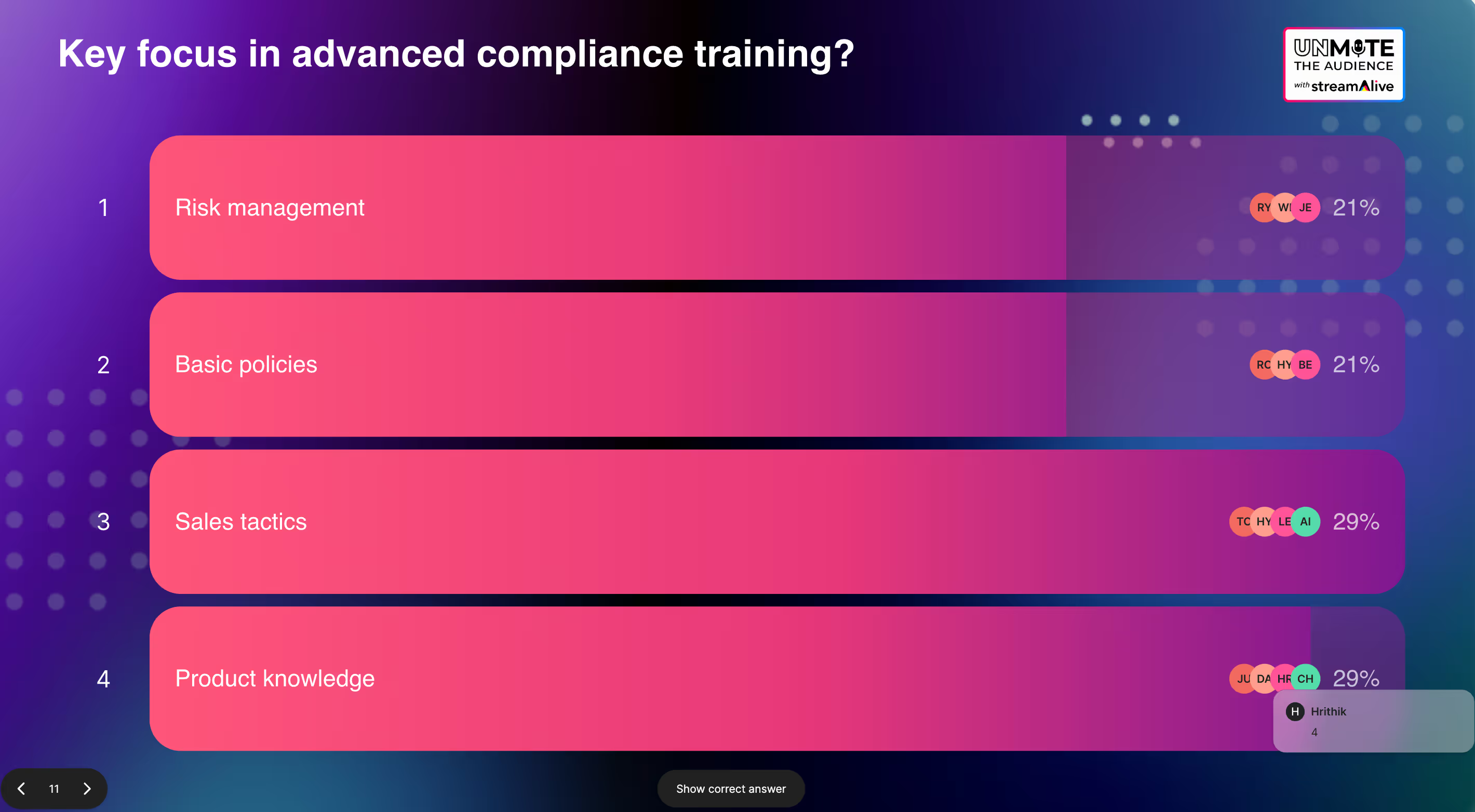
Rating Polls: get a quick read on their Systems Thinking confidence
Before you go deep, figure out where the room is. Rating Polls are perfect for that quick pulse check moment. Try these prompts: - **Confidence check:** On a scale of 110, how confident are you in explaining Systemic Thinking to a business leader? - **Maturity check:** Rate your orgs ability to think in systems (1 = siloed, 10 = highly connected). - **Reality check:** How often do you see fixes that backfire in your workplace? (1 = never, 10 = constantly). What this unlocks: you can adjust your pace instantly. If the average is low, spend more time on basics (feedback loops, delays). If its high, jump to tools like causal loop diagrams and leverage points.
Q&A (Quick Questions): stop losing great questions in the chat
In Systemic Thinking sessions, people ask thoughtful questions-but they get buried fast in chat. StreamAlives Q&A automatically captures them and displays them cleanly so you can actually manage the conversation. How to use it smoothly: - **Set the norm early:** Ask questions anytime-StreamAlive will catch them for me. - **Park questions without ignoring them:** Great question-I'm adding it to our Q&A list and well hit it after this activity. - **End with a strong close:** Pull up the captured questions and do a rapid-fire round. Good prompts to encourage questions: - What part of Systemic Thinking feels fuzzy right now? - Whats one system at work you want help diagnosing?

Analytics: prove engagement (and improve your next run)
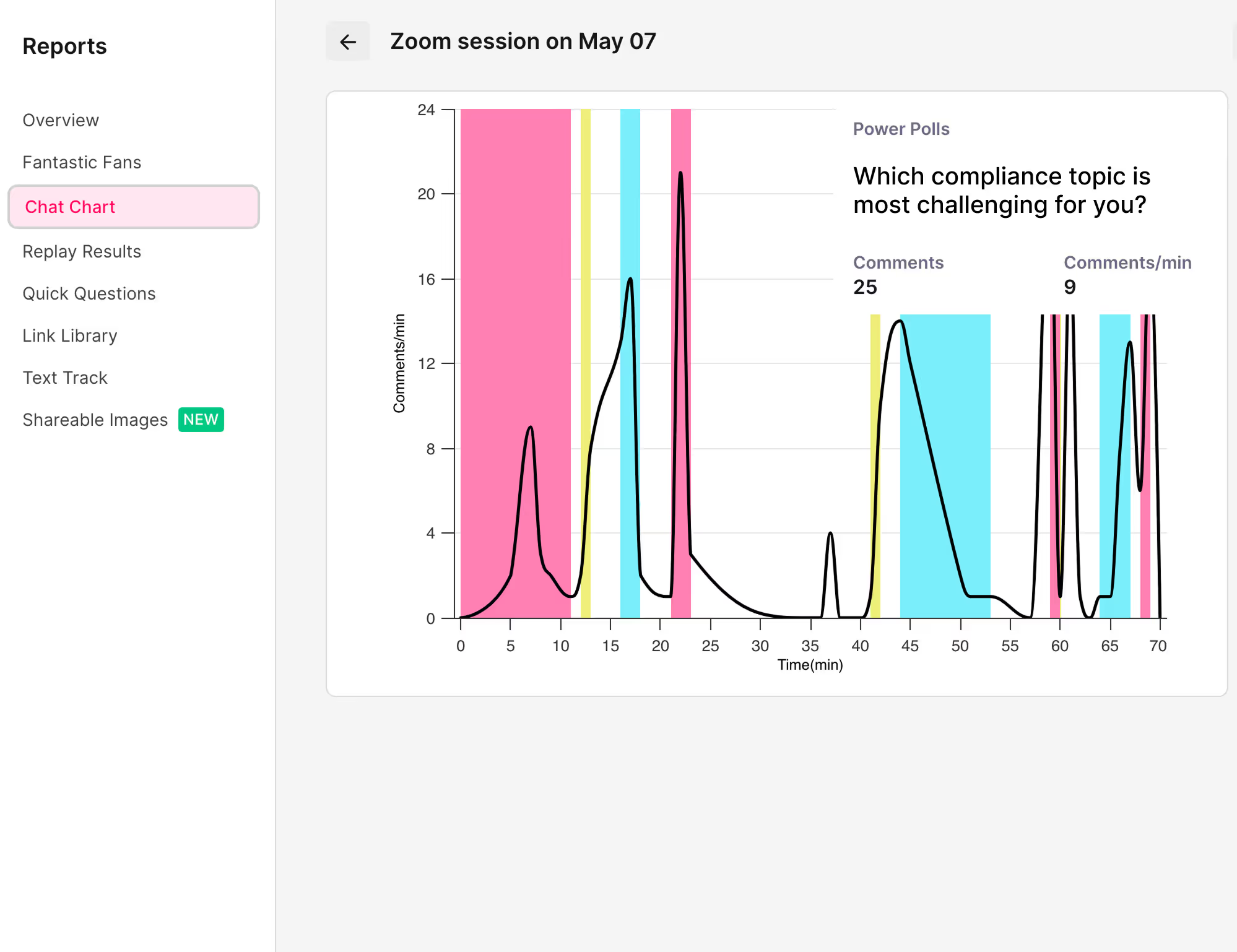
If youre an L&D Leader-or training L&D Leaders-you know the follow-up question: Did it land? StreamAlive Analytics helps you answer that with real data, not vibes. What you can learn after your session: - **Minute-by-minute engagement:** Spot where chat spiked (maybe during archetypes) and where it dipped (maybe during definitions). Next time, tighten the slow parts. - **Interaction performance:** See which activities got the most responses-your best 9x engagement moments to reuse. - **Top engaged participants (Fantastic Fans):** Identify who leaned in the most. Great for follow-up cohorts, champions, or peer facilitators. - **Shareable reporting:** Email the results to yourself or your team, or use it to debrief with stakeholders: Heres what the group cared about and where they struggled. Trainer takeaway: Analytics makes your Systemic Thinking session easier to improve every single time-and it gives you credibility when you report impact back to the business.
Use StreamAlive in all your training sessions
StreamAlive isn’t just for
Systemic Thinking
training,
it can also be used for any instructor-led training session directly inside your PowerPoint presentation.
Explore similar traingin ideas: unlocking the potential of StreamAlive
See how StreamAlive transforms live training with engaging events and interactive sessions across industries, directly inside your PowerPoint presentation.

Interactions in action
(it's free)

.svg.png)


