Install StreamAlive for your PowerPoint slides
Learn more

Higher-Ed Skepticism Training for Training Agencies
StreamAlive helps 9x the audience engagement in your Virtual Instructor-led Trainings (VILT) directly inside your powerpoint presentation.
Make your instructor-led Higher-Ed Skepticism training more fun with polls, word clouds, spinner wheels and more
Works inside your existing PowerPoint presentation
Install the StreamAlive app for PowerPoint and see your slides come to life as people participate in your interactions
AI generates audience interactions for you
Let our AI scan your presentation and automatically come up with relevant questions based on the content. Or spend two hours coming up with your own questions, your choice!
Built to work with MS Teams and Zoom
Native apps for Teams and Zoom so you never have to leave your existing workflows
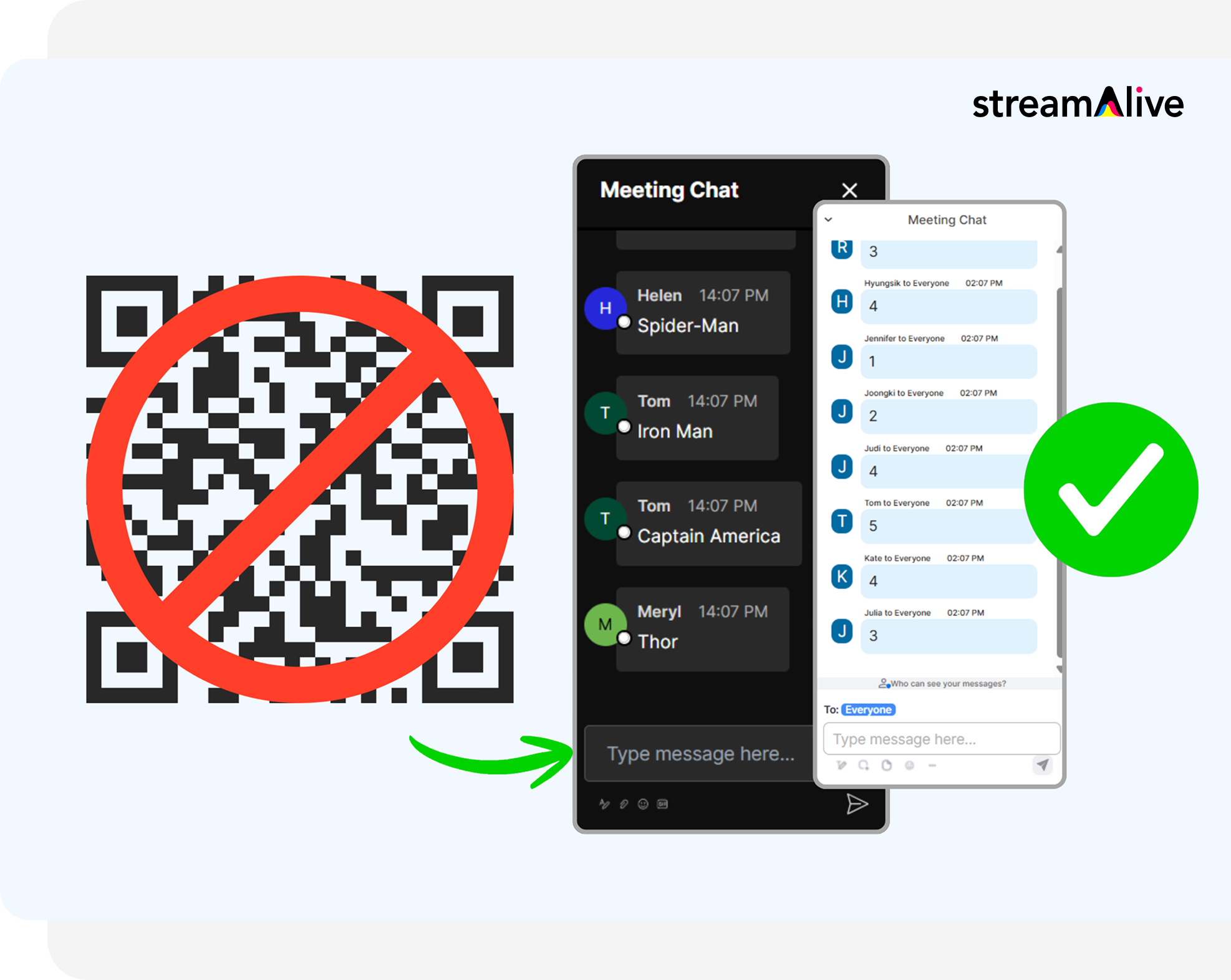
No QR Codes
Chat-powered interactions means your audience doesn’t need to scan QR codes or look at another screen to participate. They just type in the chat!
Quickly approved by your IT team
StreamAlive’s apps for Teams and Zoom means that they have been through rigorous quality assurance and client safety reviews. You’ll find everything an IT team needs to approve the app within the organization within your StreamAlive account.
Youve been asked to run a session on Higher-Ed Skepticism for a Training Agency, and you already know what can happen: people come in curious but also doubtful. The good news? With the right live interactions, you can turn that skepticism into participation fast. Here are simple ways to use StreamAlive to keep everyone involved (and honestly, make it fun).
Magic Maps: start with where are you joining from?-but make it relevant
Higher-Ed Skepticism shows up differently depending on region, institution type, and even local job markets-so Magic Maps is a perfect opener. How to use it in your session: - Kick-off icebreaker: Where are you joining us from (city + country)? Let StreamAlive plot everyone instantly so youre not just staring at a silent attendee list. - Make it topic-specific: Which city/campus has shaped your view of higher-ed the most? or Where have you seen the biggest pushback on the value of degrees? - Transition into discussion: once you see clusters (say a lot from one state/country), ask: Whats happening in your area thats making people more skeptical? Trainer tip: If your group is large, turn on the one location per attendee setting so the map stays clean and readable.

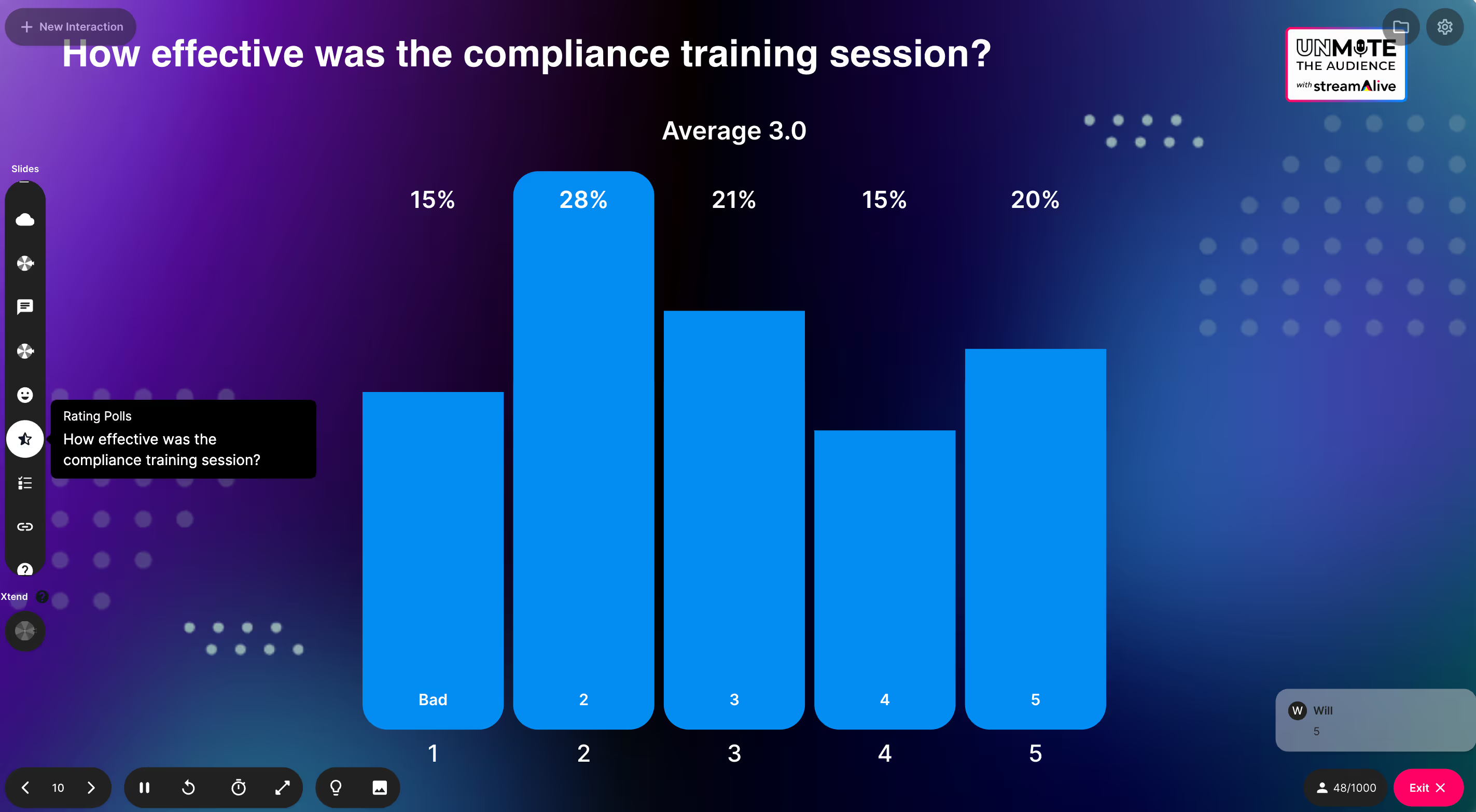
Rating Polls: get a quick read on how skeptical the room actually is
Before you teach anything, find out what youre dealing with. Rating Polls let you do that in seconds, and people love low-effort participation. Ways to use Rating Polls for Higher-Ed Skepticism: - Pulse check at the start: On a scale of 110, how strong is higher-ed skepticism in your audience/client base right now? - Confidence check: Rate your confidence in handling objections like college is a scam (1 = not confident, 10 = very confident). - Mid-session temperature check: How useful has this been so far? (great for adjusting pacing in real time) Trainer tip: Call out what you see: Looks like most of us are at a 68 cool, were in the right session. It builds trust fast.
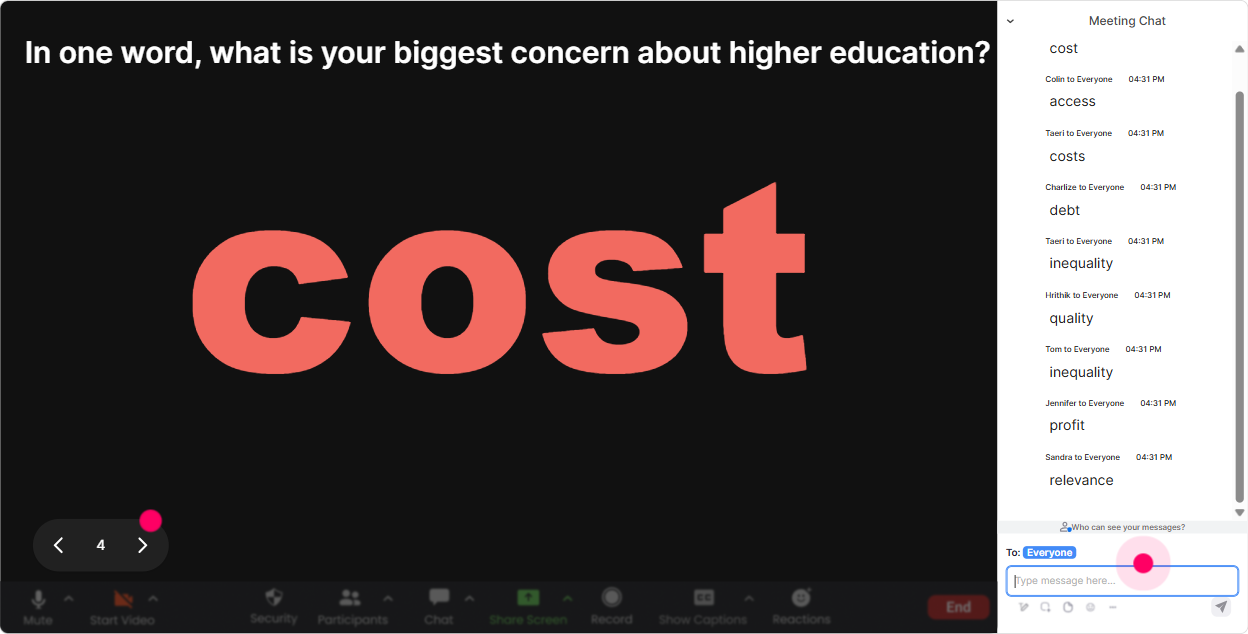
Wonder Words (Word Cloud): let them say what theyre thinking-without putting anyone on the spot
Skepticism can be a touchy topic. Some people dont want to say their real opinion out loud. A word cloud makes it safe, quick, and visual. Prompts that work really well: - When you hear higher-ed skepticism, whats the first word that comes to mind? - Whats the biggest reason people doubt higher-ed value? (12 words) - What emotion do you hear most from learners/clients? (confused, frustrated, hopeful, angry, etc.) Trainer tip: Use Combine Similar Answers so cost, expensive, and tuition dont split into tiny bubbles. Then you can say, Okay-COST is clearly the monster in the room.
Talking Tiles: turn real experiences into a group conversation (without awkward silence)
When you want more than one-word answers-like stories, examples, or real challenges-Talking Tiles is gold. People type, and their messages become the content you teach from. Try prompts like: - Whats one skeptical comment youve heard recently about college or credentials? Paste it exactly as you heard it. - Where does Higher-Ed Skepticism show up in your job (sales calls, learner onboarding, leadership meetings, program design)? - Whats a moment you felt stuck responding to skepticism? Trainer tip: Pick 23 tiles and respond live: This one is common-heres a clean way to reframe it. Suddenly your training feels tailored, not generic.
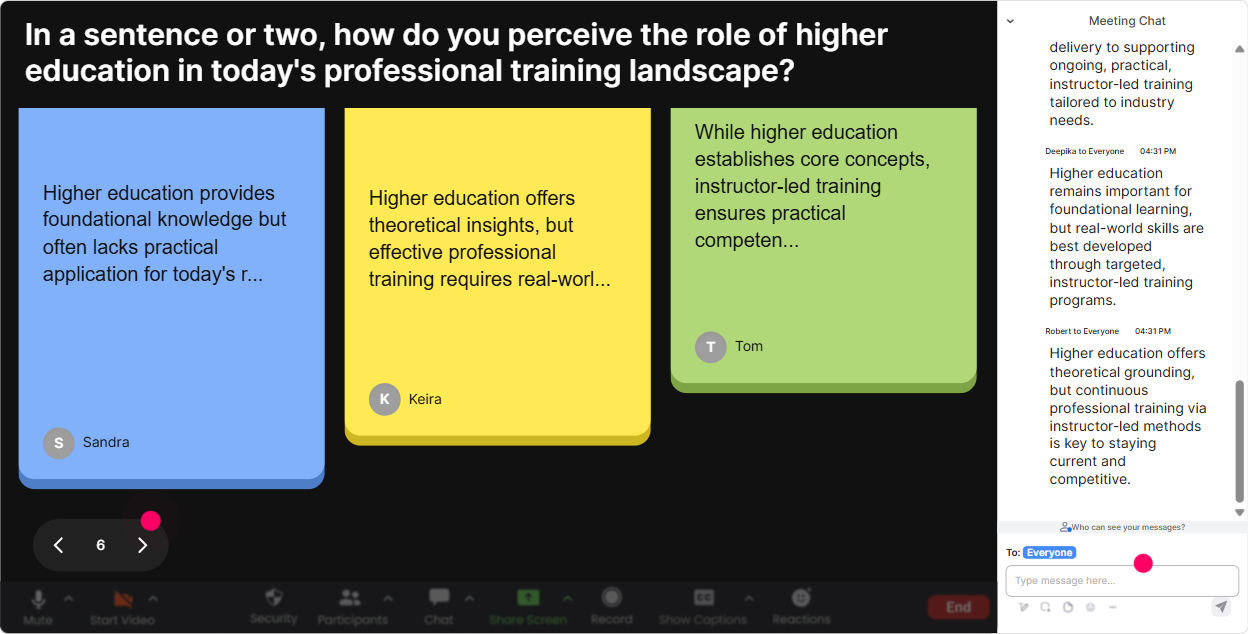
Power Polls: find out what they want help with-then teach to that
Higher-Ed Skepticism is a big umbrella. Some people need help with messaging, others with research, others with handling objections. Power Polls help you prioritize what matters to this specific room. Poll ideas you can run early: - Whats the hardest part of dealing with higher-ed skepticism? 1) Tuition/cost objections 2) ROI and employability doubts 3) Skills > degrees arguments 4) Credential alternatives (bootcamps, certs) 5) Trust issues (institutions, politics, media) - Which audience are you dealing with most? 1) Students 2) Parents 3) Corporate partners 4) Internal leadership Trainer tip: Tell them youll adapt the agenda based on results-and actually do it. That alone boosts engagement because they feel heard.
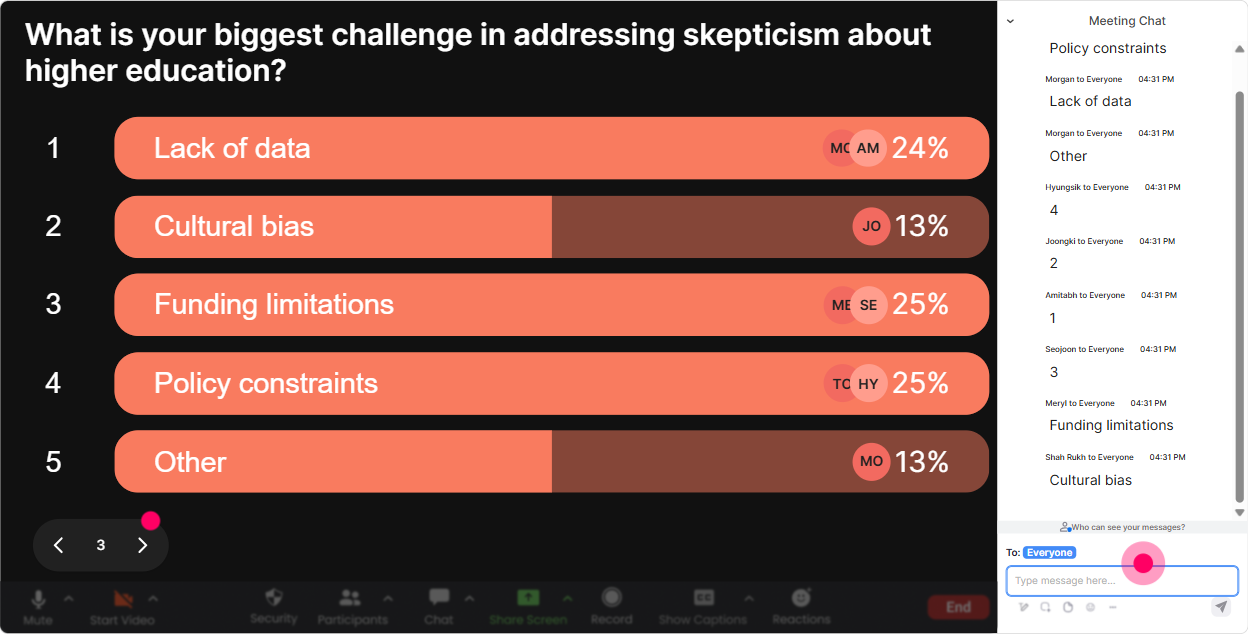
Winner Wheel: get participation from the quiet ones (without being pushy)
You know the moment: you ask a question and the same two people answer. Winner Wheel fixes that in a fun, fair way-especially for roleplays or quick shares. Ways to use it: - After a chat activity: Everyone drop one objection you hear most. Great-now Im spinning the wheel to pick someone to unmute and share how they usually respond. - For mini roleplays: We need a volunteer to play the skeptic-wheel decides! - For rewards: Ill spin from everyone who commented in the last activity-winner gets a resource bundle / template / shoutout. Trainer tip: Set the tone: If you get picked, no pressure to be perfect-just be real. That keeps it playful, not stressful.
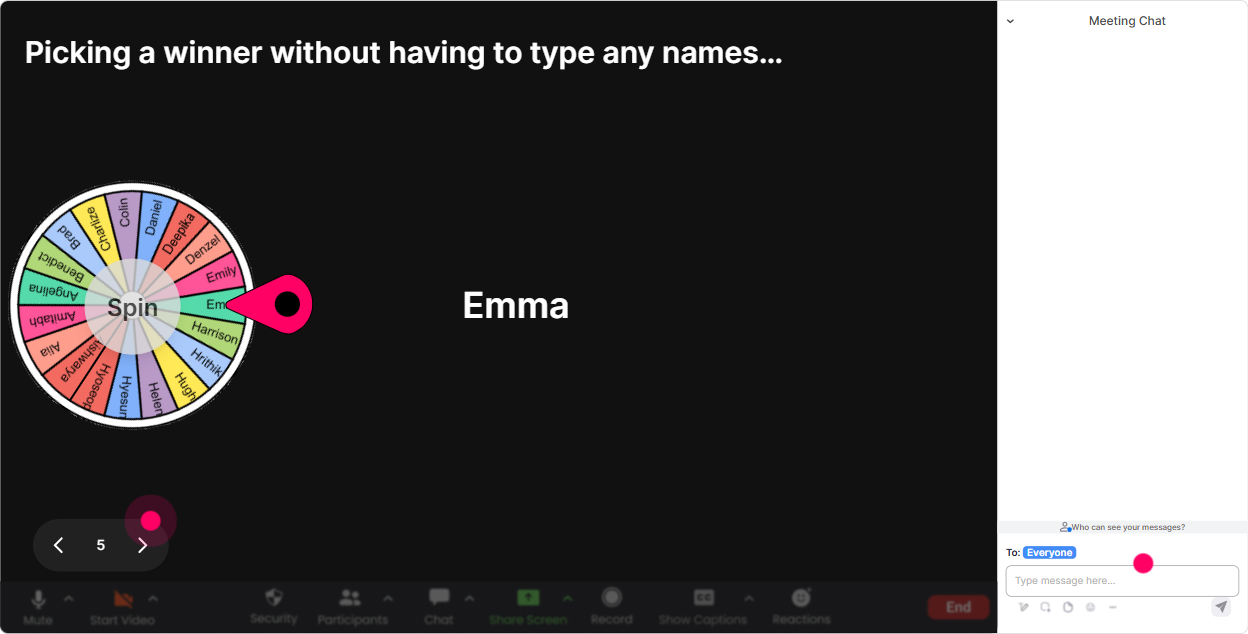
Quiz: do quick knowledge checks that feel like a game (not an exam)
When youre teaching something that people might be defensive about, quizzes help you keep it light while still locking in learning. Quiz questions that fit Higher-Ed Skepticism: - Which factor has most consistently contributed to increased skepticism about higher-ed in the last decade? A) Rising tuition costs B) Lower internet speeds C) Less job mobility D) Fewer majors available (Correct: A) - Which response is best when someone says: A degree is useless now? A) Thats not true B) Youre wrong-look at the data C) It depends-what outcome are you trying to achieve? D) College is still the only path (Correct: C) Trainer tip: After you reveal the correct answer, ask: Why do you think the other options are tempting? Thats where the real learning happens.
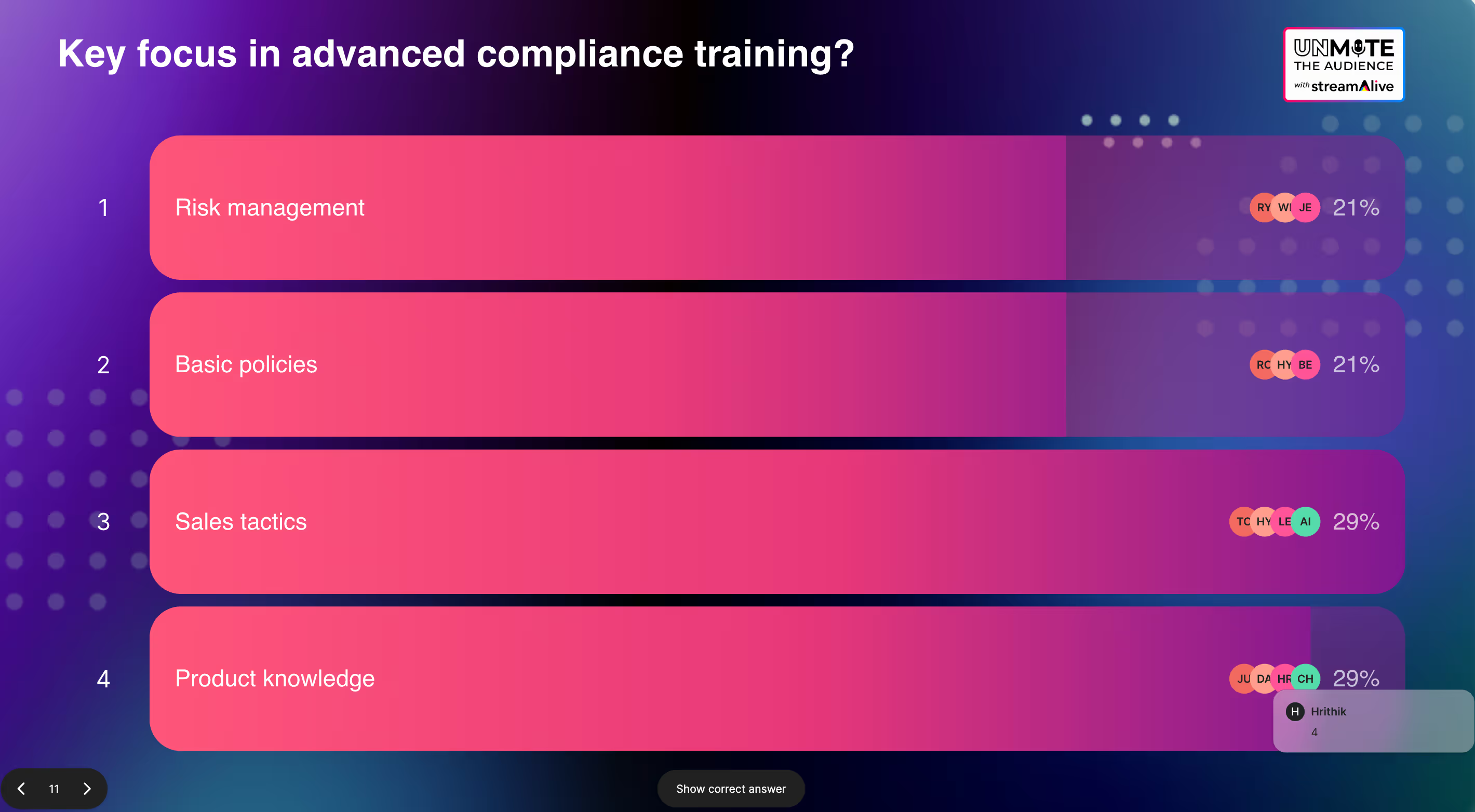
Rating Polls: get a quick read on how skeptical the room actually is
Before you teach anything, find out what youre dealing with. Rating Polls let you do that in seconds, and people love low-effort participation. Ways to use Rating Polls for Higher-Ed Skepticism: - Pulse check at the start: On a scale of 110, how strong is higher-ed skepticism in your audience/client base right now? - Confidence check: Rate your confidence in handling objections like college is a scam (1 = not confident, 10 = very confident). - Mid-session temperature check: How useful has this been so far? (great for adjusting pacing in real time) Trainer tip: Call out what you see: Looks like most of us are at a 68 cool, were in the right session. It builds trust fast.
Q&A (Quick Questions): catch every question-even the ones buried in chat
In skepticism-heavy sessions, questions come fast-and theyre sometimes spicy. StreamAlives Q&A pulls questions out of the chat and organizes them so you dont miss the good stuff. How to use it: - Tell them: Drop questions anytime-StreamAlive will capture them. This reduces interruptions and keeps flow. - Do a dedicated Objection Clinic segment: Ask your toughest question about defending higher-ed value-no filters. - Save and group questions: answer themes like cost, ROI, alternatives, trust, or outcomes. Trainer tip: If you notice repeat questions, say: Seeing 4 versions of the same question-awesome, lets tackle that head-on. It reassures the room theyre not alone.

Analytics: prove what worked, improve what didnt, and spot your real champions
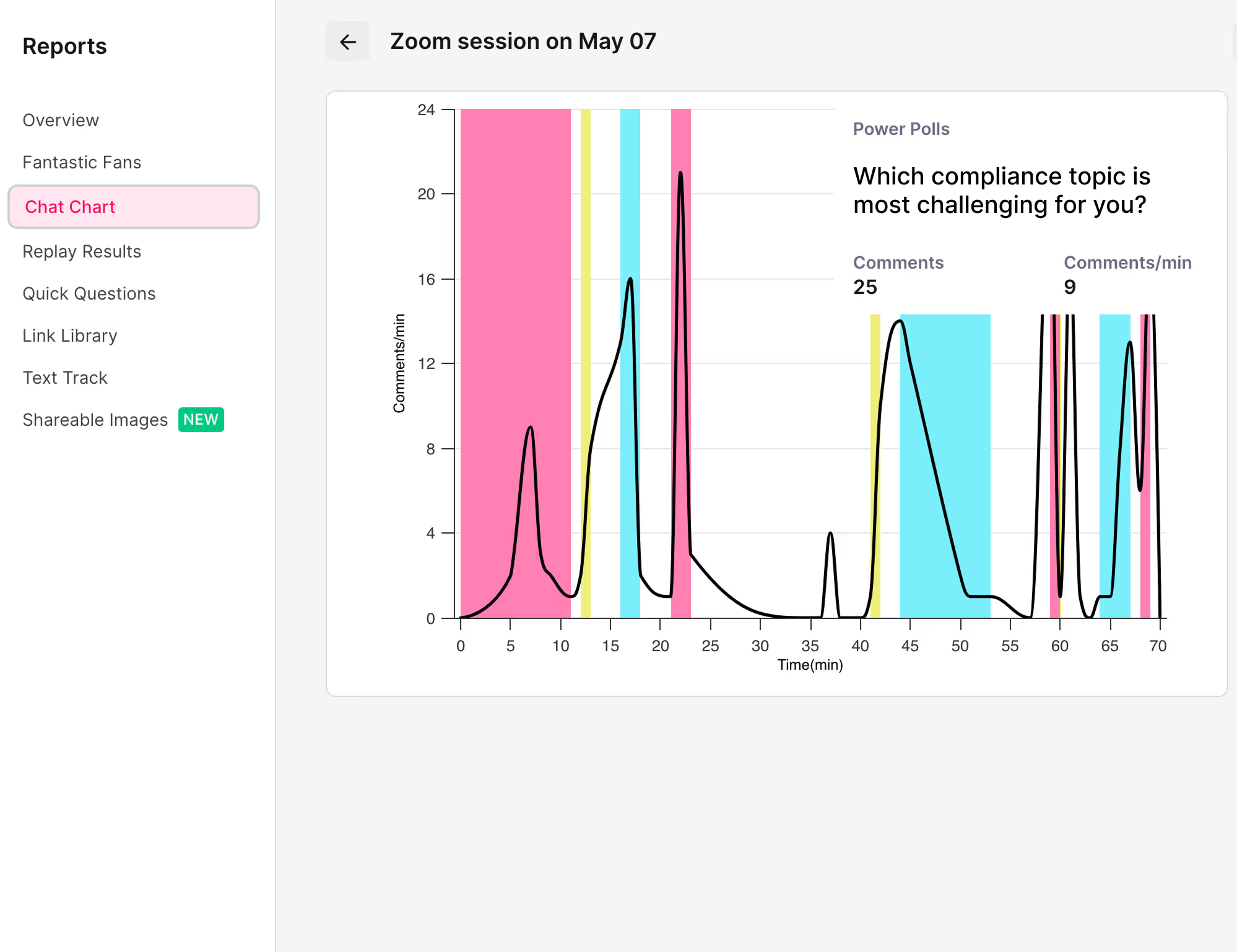
After the session, Analytics is where you get the trainer superpower: you can see exactly when engagement spiked, what interactions landed, and who participated most. What to look at for Higher-Ed Skepticism training: - Minute-by-minute engagement: Identify the moment skepticism turned into curiosity (often after a poll or a roleplay). - Chat replay + interaction results: See which topics triggered the most conversation-cost, ROI, trust, or alternatives. - Fantastic Fans: Find your most engaged attendees (these are often your future champions, coordinators, or repeat clients). - Email reports: Send results to your team or client stakeholders to show participation and outcomes. Trainer tip: Use the data to tweak your next delivery: Poll earlier, more objection practice, shorter lecture blocks. Thats how you steadily push engagement up session after session.
Use StreamAlive in all your training sessions
StreamAlive isn’t just for
Higher-Ed Skepticism
training,
it can also be used for any instructor-led training session directly inside your PowerPoint presentation.
Explore similar traingin ideas: unlocking the potential of StreamAlive
See how StreamAlive transforms live training with engaging events and interactive sessions across industries, directly inside your PowerPoint presentation.

Interactions in action
(it's free)

.svg.png)


