Install StreamAlive for your PowerPoint slides
Learn more

Cross-Cultural Competence Training for L&D Leaders
StreamAlive helps 9x the audience engagement in your Virtual Instructor-led Trainings (VILT) directly inside your powerpoint presentation.
Make your instructor-led Cross-Cultural Competence training more fun with polls, word clouds, spinner wheels and more
Works inside your existing PowerPoint presentation
Install the StreamAlive app for PowerPoint and see your slides come to life as people participate in your interactions
AI generates audience interactions for you
Let our AI scan your presentation and automatically come up with relevant questions based on the content. Or spend two hours coming up with your own questions, your choice!
Built to work with MS Teams and Zoom
Native apps for Teams and Zoom so you never have to leave your existing workflows
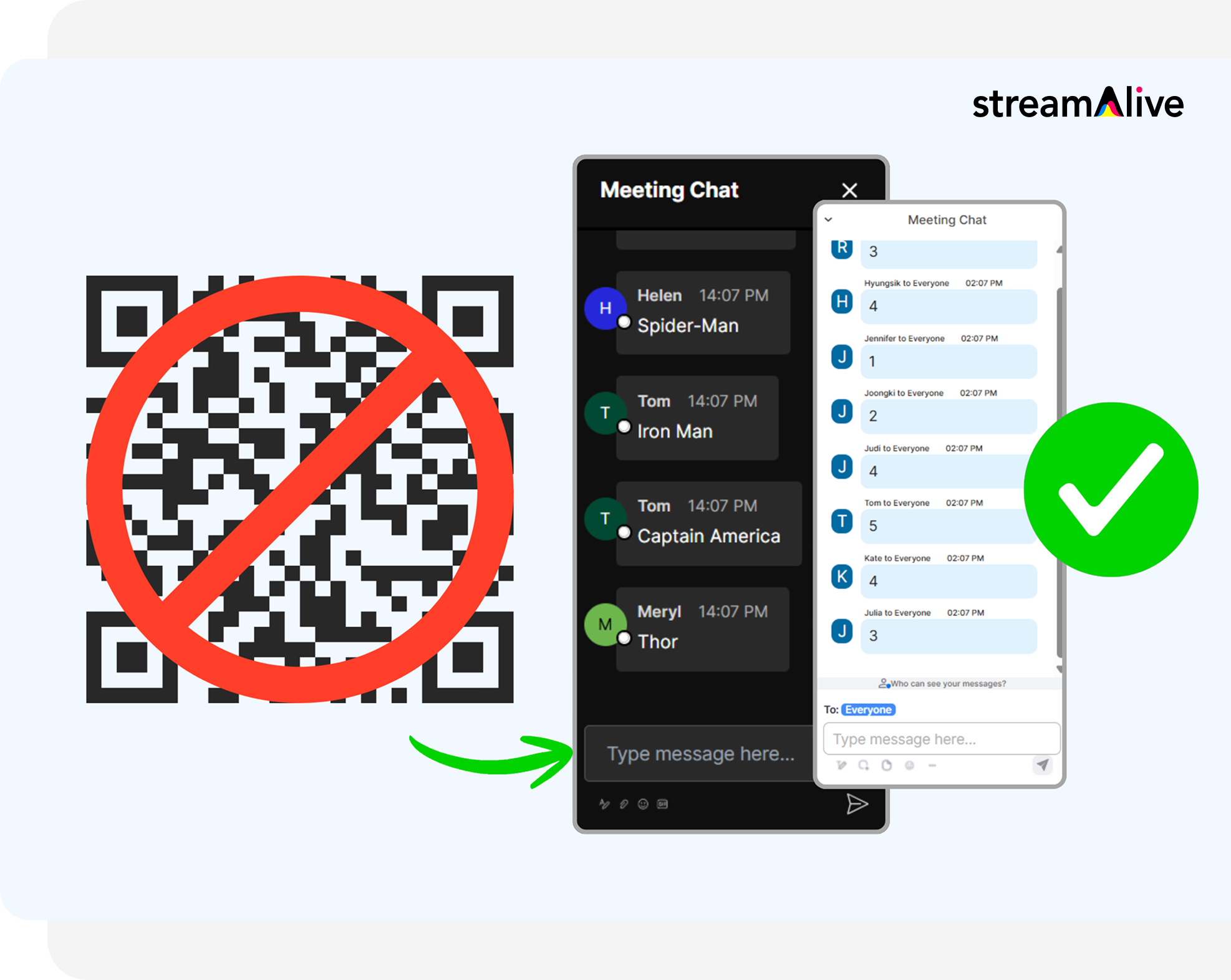
No QR Codes
Chat-powered interactions means your audience doesn’t need to scan QR codes or look at another screen to participate. They just type in the chat!
Quickly approved by your IT team
StreamAlive’s apps for Teams and Zoom means that they have been through rigorous quality assurance and client safety reviews. You’ll find everything an IT team needs to approve the app within the organization within your StreamAlive account.
Youve been asked to run a Cross-Cultural Competence instructor-led training for L&D Leaders-and you dont want it to turn into another slide-and-sigh session. The good news: this topic is naturally interactive if you let people bring their real experiences into the room. Here are practical ways to make it lively (and way more engaging) using StreamAlive interactions.
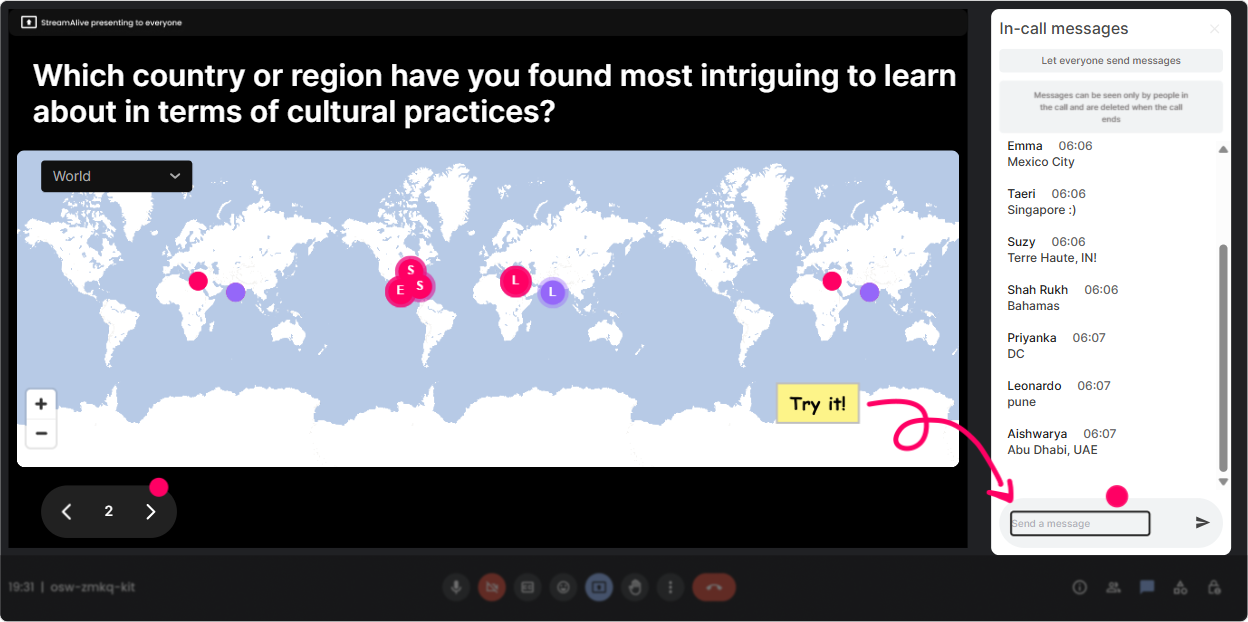
1) Magic Maps: Put your cultures-in-the-room on the map (literally)
Cross-cultural competence starts with one simple truth: everyones context is different. Magic Maps makes that visible in the first 60 seconds. How to use it in your session: - Kick-off question (classic but powerful): Where in the world are you joining from today? - Then make it relevant to the topic: Whats one country/city you work with most often? - Or a deeper warm-up: Drop a place where youve experienced culture shock-work or personal. Why it works for L&D Leaders: - You instantly create psychological safety: Oh, we really do have a mix of perspectives here. - It sets you up perfectly for talking about cultural lenses, time zones, communication norms, and assumptions. Trainer tip: If youre running an internal cohort (same company), ask: Which office/site are you closest to? It sparks cross-site connection fast.
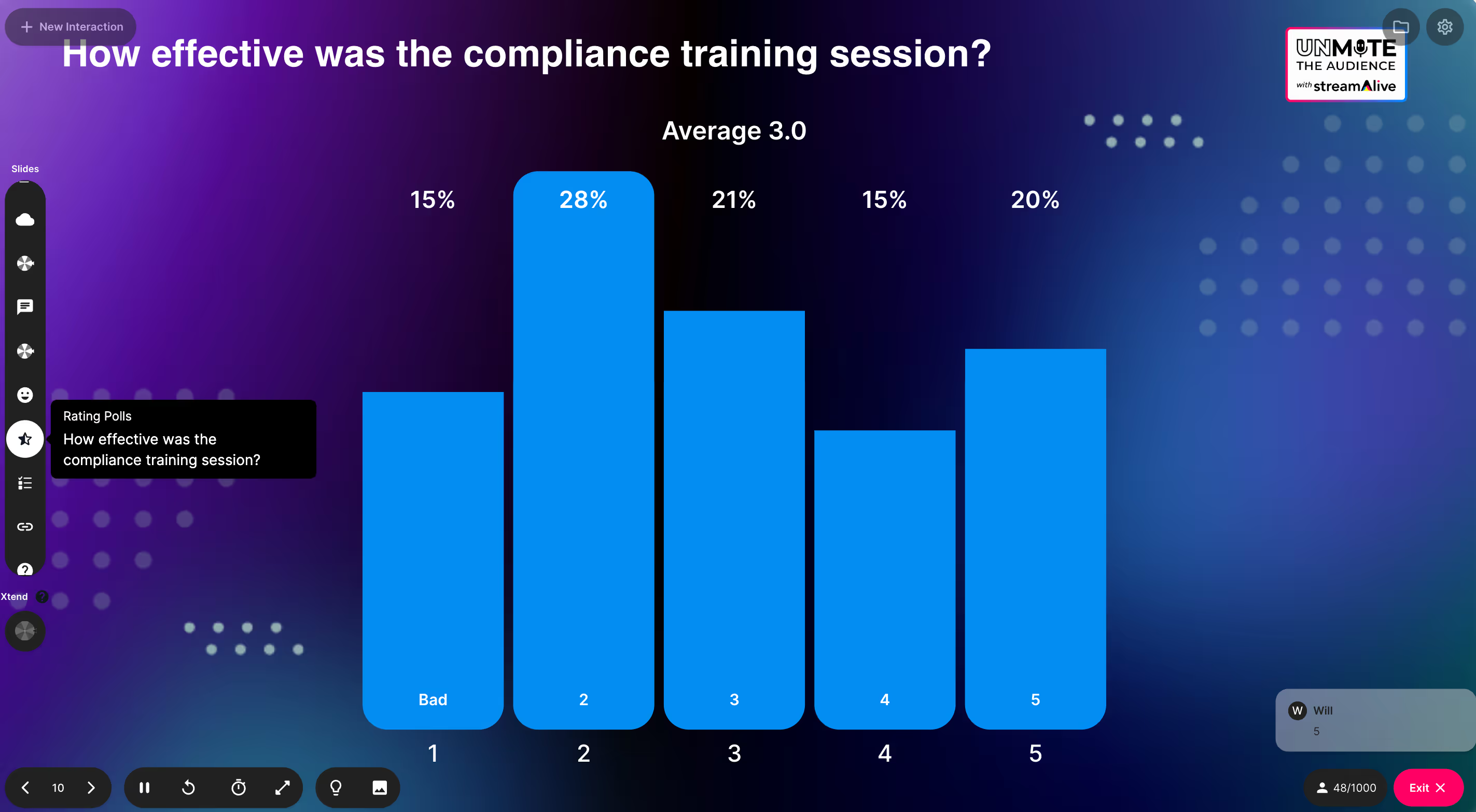
2) Rating Polls: Get an honest pulse check-without putting anyone on the spot
Before you teach anything, find out where people think they are. Rating Polls are perfect because theyre quick, anonymous-feeling, and super visual. Use it to gauge confidence and readiness: - Rate your confidence in leading cross-cultural conversations at work (110). - How often do cultural misunderstandings show up in your projects? (1 = never, 10 = constantly) - How comfortable are you giving feedback across cultures? (110) How to make it useful in the moment: - If you see a wide spread, say: Nice-this tells me weve got both experienced folks and folks still building the muscle. Well pace it so everyone wins. - If the average is high, challenge them: Cool-then well go beyond basics and get into real-world edge cases. This is one of the easiest ways to keep engagement high because people love seeing where they stand compared to the room.
3) Wonder Words (Word Cloud): Turn feelings + assumptions into a teachable moment
Cross-cultural competence isnt just skills-its emotions, beliefs, and the stories we tell ourselves. A word cloud surfaces that fast. Ask one-to-two word prompts like: - When you hear cross-cultural communication, whats the first word that comes to mind? - Whats the hardest part of working across cultures? (12 words) - One value you think your workplace culture rewards most? What you do with the results: - If words like awkward, fear, misunderstood, show up-boom, youve got a perfect opening to talk about discomfort tolerance and curiosity. - If you see respect, clarity, adaptability, you can reinforce: Great-those are exactly the muscles were building today. Trainer tip: Use Combine Similar Answers so bias/biases or trust/trusting dont split your data.
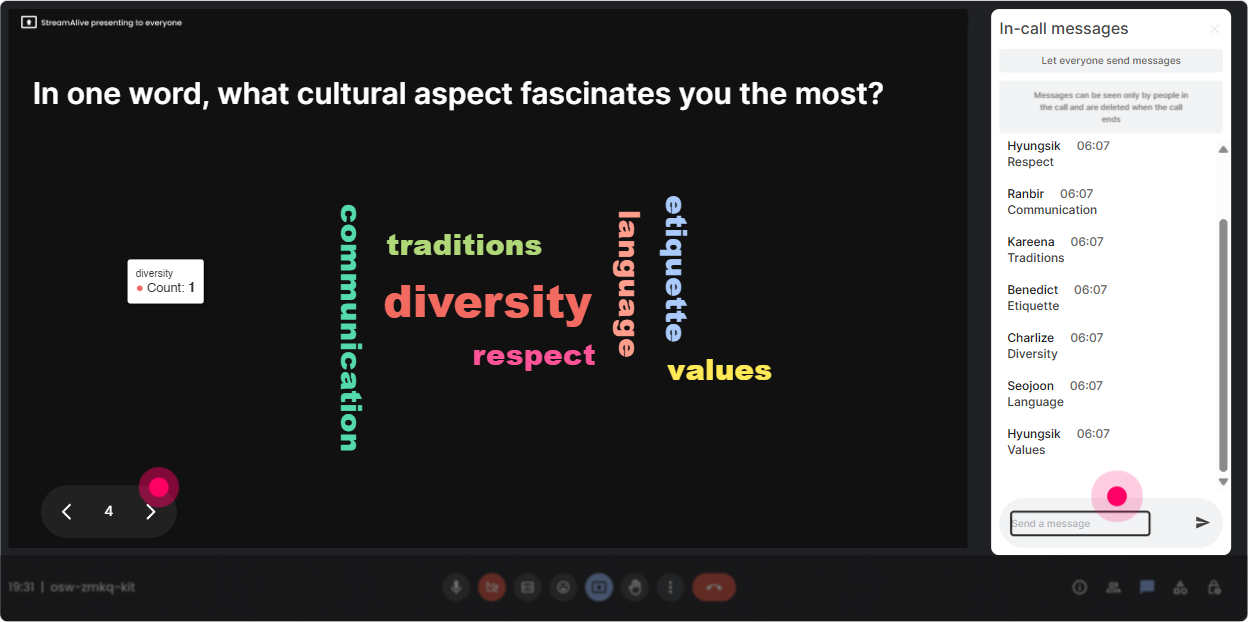
4) Talking Tiles: Let them share real stories (without you begging for participation)
This is where your session becomes memorable. Talking Tiles is amazing for pulling richer responses from the chat and making them feel like the groups voice is on-screen. Prompts that work really well for L&D Leaders: - Share a moment when a cultural difference impacted a project outcome-what happened? - Whats one communication norm youve had to adapt (directness, silence, hierarchy, time)? - Finish this sentence: In my culture, a respectful meeting looks like Why it boosts engagement: - People are more willing to type a story than unmute. - You get tons of real scenarios to teach from-without having to invent case studies. Trainer tip: After 610 tiles, pause and say: Im noticing patterns here and connect their comments to your model (CQ, Hofstede, Lewis Model, feedback frameworks, etc.).
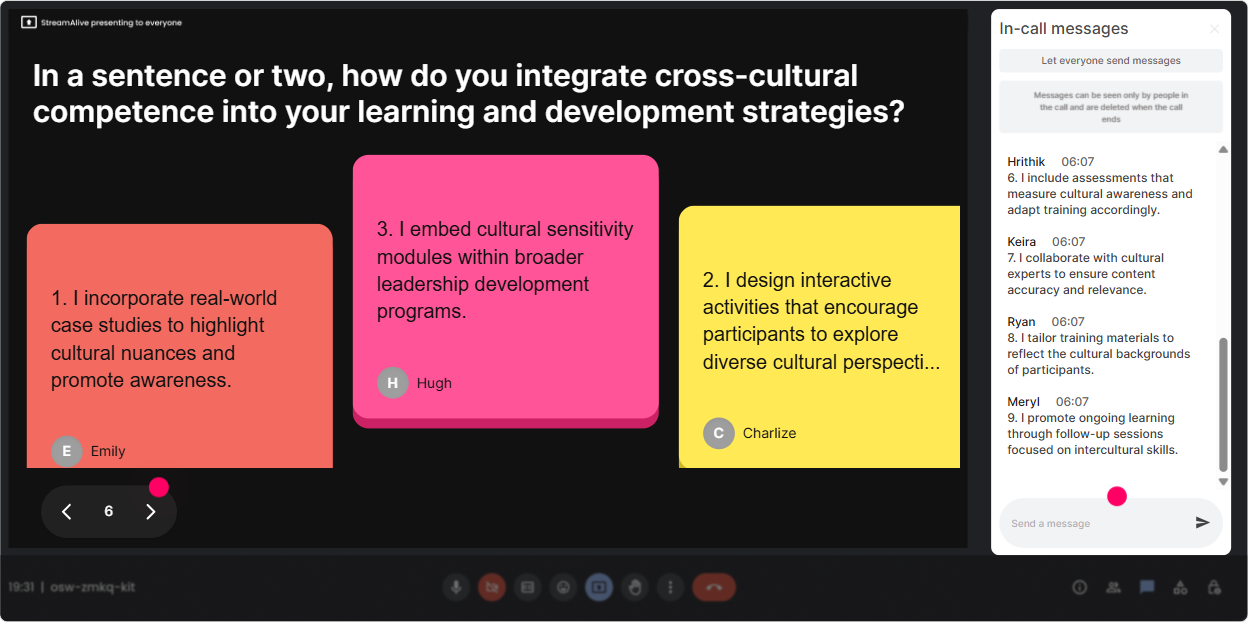
5) Power Polls: Let the group choose what you go deeper on
L&D Leaders love relevance. Power Polls let your audience tell you what matters most to them-and makes them feel like co-designers of the session. Poll ideas for Cross-Cultural Competence training: - What do you want more help with today? 1) Giving feedback across cultures 2) Running inclusive meetings 3) Managing conflict + misunderstandings 4) Leading global virtual teams 5) Building trust quickly - Where do you see the biggest risk in your org right now? 1) Miscommunication 2) Engagement/retention 3) Global collaboration speed 4) Customer relationships How to use the results: - Call it out live: Alright, looks like feedback and inclusive meetings are the winners-lets spend extra time there. - Then adjust your examples, role plays, or breakouts accordingly. This one interaction can buy you a ton of attention because youre proving youre not delivering a canned workshop.
6) Winner Wheel (Spinner Wheel): Make participation fun-and fair
Sometimes you need voices, not just chat. But calling on people can feel awkward-especially in a session about culture and psychological safety. Spinner Wheel solves that because it feels playful and random. How to use it without making people dread it: - Tell them up front: If you get picked and youd rather pass, just say pass-no stress. - Spin for low-risk questions first: - Whats one cultural norm you appreciate about a place youve worked with? - Whats a meeting habit you wish your team would change? Other smart uses: - Spin to pick a team to share out after breakout rooms. - Spin to pick who gets to choose the next scenario/case study. - Spin for small rewards: Winner gets bragging rights / coffee card / chooses the next prompt. This keeps chat participation up because people know interaction increases their chances of being picked (or winning something).

7) Quiz: Quick knowledge checks that dont feel like school
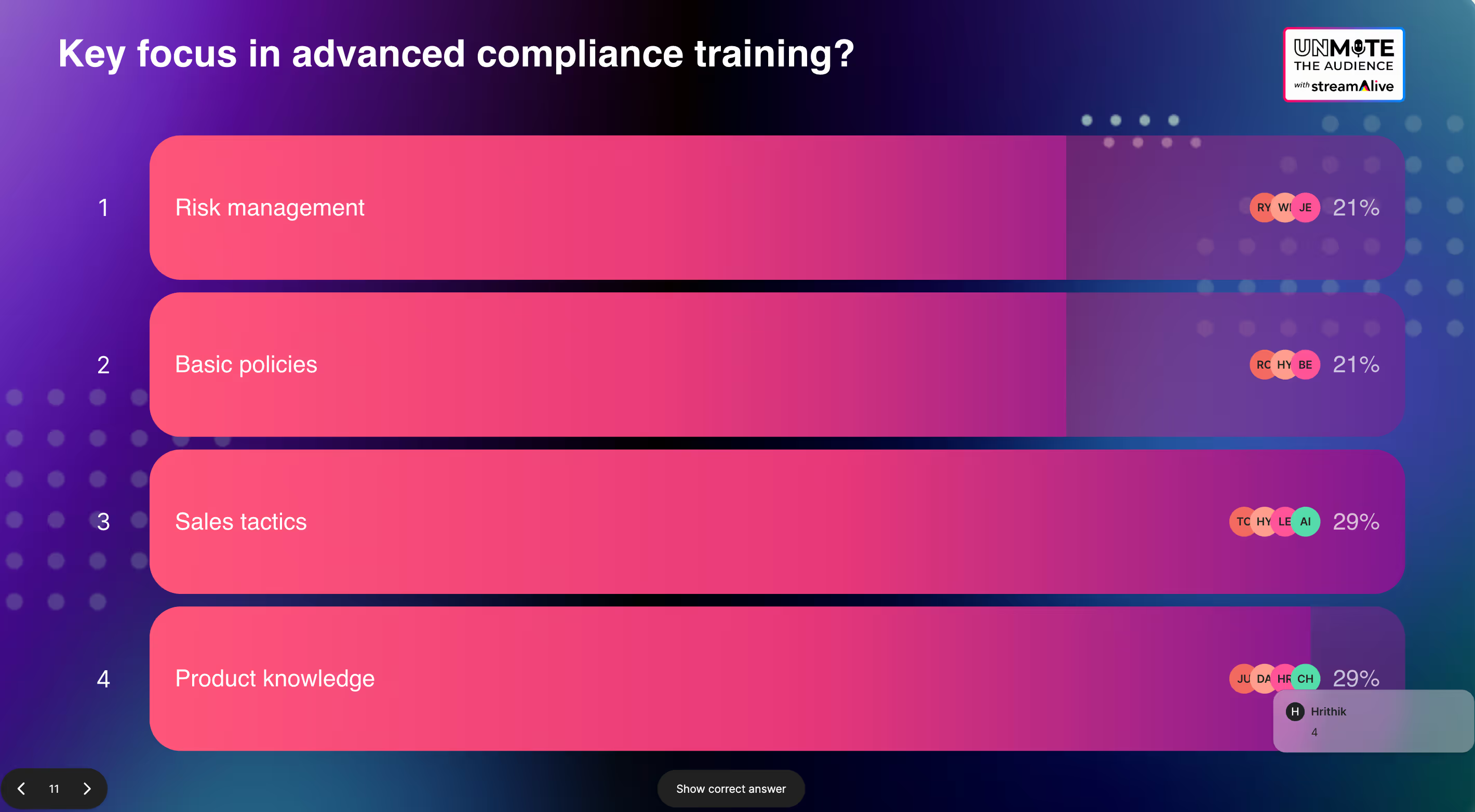
Cross-cultural competence has a bunch of sounds right but isnt always right moments. A Quiz interaction is perfect for busting myths and reinforcing key concepts. Quiz questions you can use: - Which approach usually works best when youre unsure of a cultural norm? 1) Assume your norm is universal 2) Avoid the topic completely 3) Ask curious, respectful questions and clarify expectations (Correct) 4) Let the most senior person decide every time - In high-context cultures, communication is often 1) More indirect and dependent on context (Correct) 2) Always blunt and explicit 3) Only written, never verbal 4) Identical to low-context styles How to run it like a pro: - Let them vote. - Ask: Why do you think that option is popular? - Then reveal the correct answer and tie it to a real workplace example (feedback, deadlines, silence in meetings, decision-making, etc.).
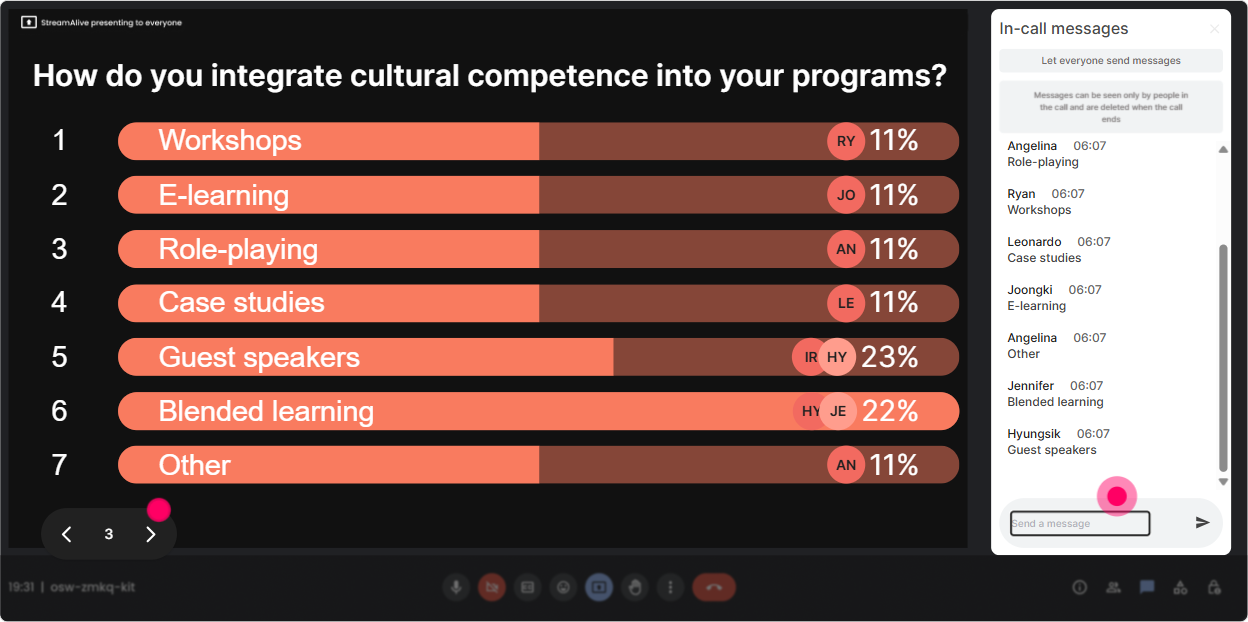
2) Rating Polls: Get an honest pulse check-without putting anyone on the spot
Before you teach anything, find out where people think they are. Rating Polls are perfect because theyre quick, anonymous-feeling, and super visual. Use it to gauge confidence and readiness: - Rate your confidence in leading cross-cultural conversations at work (110). - How often do cultural misunderstandings show up in your projects? (1 = never, 10 = constantly) - How comfortable are you giving feedback across cultures? (110) How to make it useful in the moment: - If you see a wide spread, say: Nice-this tells me weve got both experienced folks and folks still building the muscle. Well pace it so everyone wins. - If the average is high, challenge them: Cool-then well go beyond basics and get into real-world edge cases. This is one of the easiest ways to keep engagement high because people love seeing where they stand compared to the room.
8) Q&A (Quick Questions): Catch the real questions people are afraid to ask out loud
Cross-cultural topics trigger a lot of Is it okay to say this? energy. Quick Questions helps because StreamAlive collects questions from chat automatically, so youre not hunting through messages. How to use it during this training: - Set a norm early: Drop questions anytime-especially the messy ones. If youre thinking it, someone else is too. - Do two planned Q&A moments: - Midpoint: after frameworks/models - End: after practice/role plays Great prompts to invite the right kind of questions: - Whats a cross-cultural situation youre navigating right now? - Whats a conversation youre avoiding? Trainer tip: If a sensitive question comes in, you can answer it by focusing on behaviors, impact, and curiosity-not stereotypes.

9) Analytics: Prove what worked, improve what didnt (and show ROI to stakeholders)
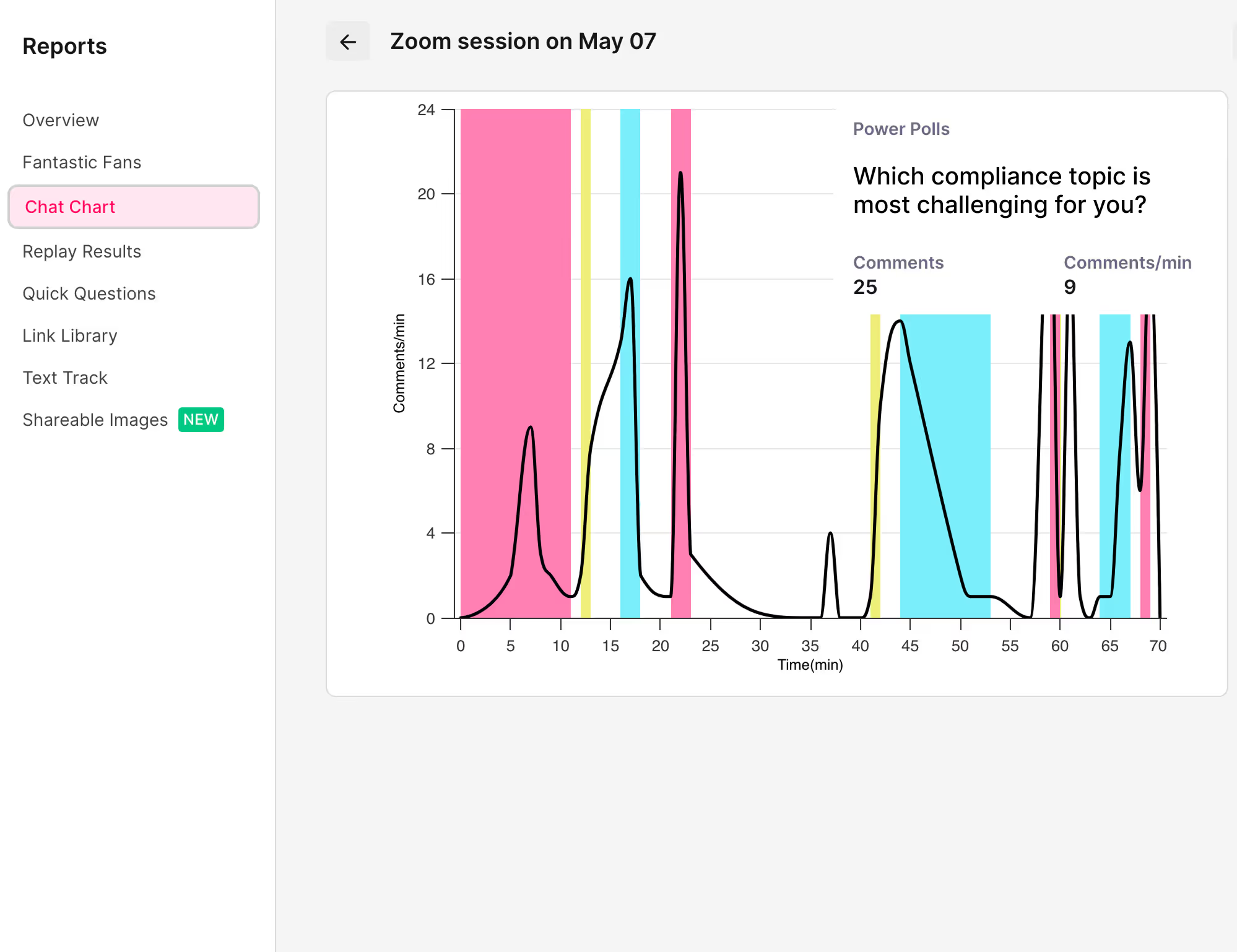
If youre training L&D Leaders, someone will eventually ask: Did this session actually land? StreamAlive Analytics helps you answer that with real data. What to look at after your Cross-Cultural Competence session: - Minute-by-minute engagement: Identify the moments your group leaned in (case studies? polls? a specific framework?). - Interaction reports: See which questions got the most responses-those are your strongest prompts for next time. - Top engaged participants (Fantastic Fans): Helpful if you want to invite champions into follow-up cohorts, communities of practice, or pilot groups. How L&D teams use this: - Share a quick recap with stakeholders: Heres what participants cared about most (poll results + word cloud). - Improve your design: If engagement dips during lecture-heavy sections, you know exactly where to add an interaction next run. Bottom line: Analytics turns I think it went well into Heres what the audience did, said, and engaged with.
Use StreamAlive in all your training sessions
StreamAlive isn’t just for
Cross-Cultural Competence
training,
it can also be used for any instructor-led training session directly inside your PowerPoint presentation.
Explore similar traingin ideas: unlocking the potential of StreamAlive
See how StreamAlive transforms live training with engaging events and interactive sessions across industries, directly inside your PowerPoint presentation.

Interactions in action
(it's free)

.svg.png)


