Install StreamAlive for your PowerPoint slides
Learn more

Mental Health & Wellbeing Focus Training for L&D Leaders
StreamAlive helps 9x the audience engagement in your Virtual Instructor-led Trainings (VILT) directly inside your powerpoint presentation.
Make your instructor-led Mental Health & Wellbeing Focus training more fun with polls, word clouds, spinner wheels and more
Works inside your existing PowerPoint presentation
Install the StreamAlive app for PowerPoint and see your slides come to life as people participate in your interactions
AI generates audience interactions for you
Let our AI scan your presentation and automatically come up with relevant questions based on the content. Or spend two hours coming up with your own questions, your choice!
Built to work with MS Teams and Zoom
Native apps for Teams and Zoom so you never have to leave your existing workflows
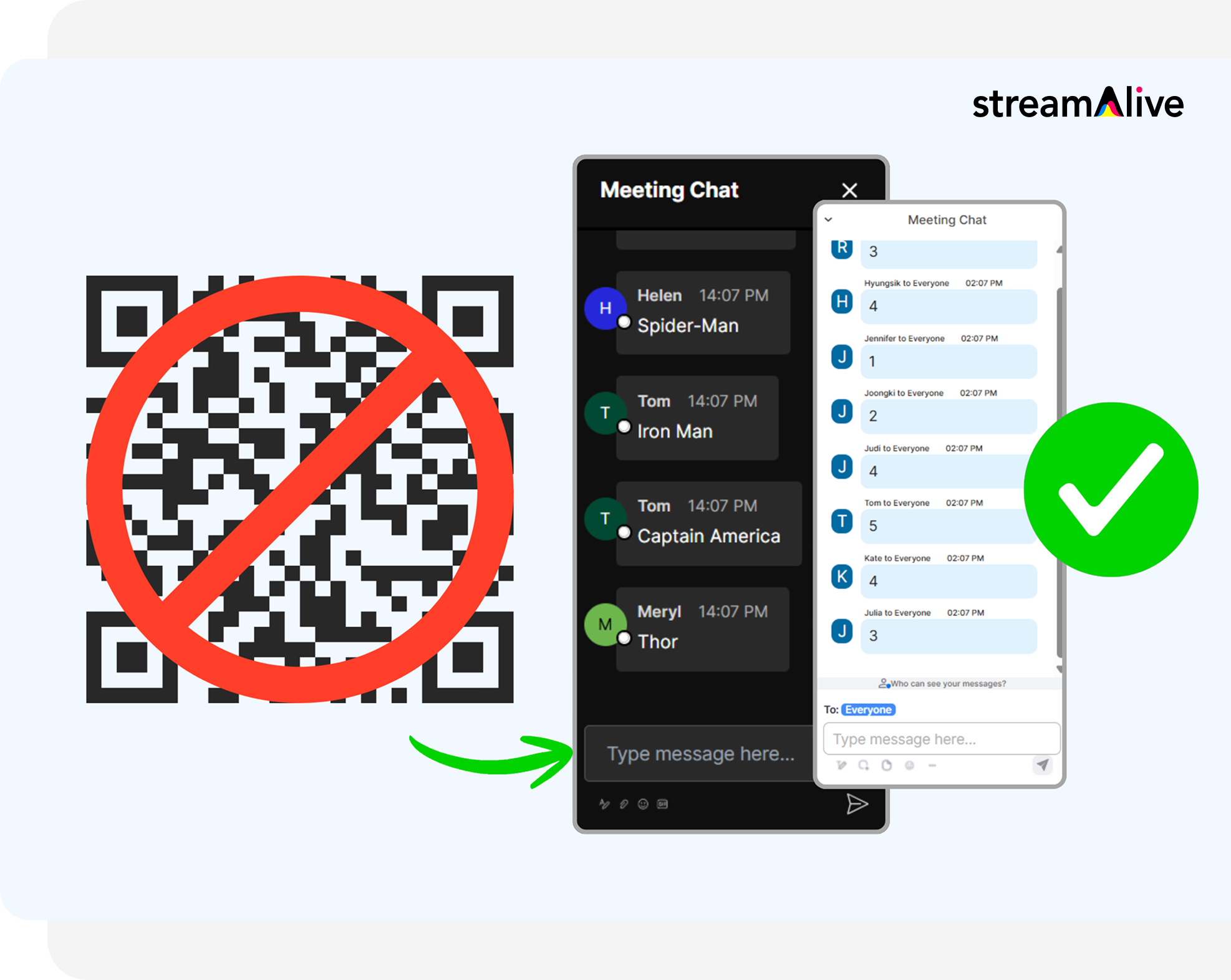
No QR Codes
Chat-powered interactions means your audience doesn’t need to scan QR codes or look at another screen to participate. They just type in the chat!
Quickly approved by your IT team
StreamAlive’s apps for Teams and Zoom means that they have been through rigorous quality assurance and client safety reviews. You’ll find everything an IT team needs to approve the app within the organization within your StreamAlive account.
Youve been asked to run a Mental Health & Wellbeing Focus session for L&D Leaders-and you want it to feel human, safe, and actually engaging (not another slide-and-sigh webinar). The good news: with a few smart interaction moments, you can get people talking, reflecting, and learning in real time. Heres how StreamAlive helps you do that-without adding extra work.
1) Magic Maps: Start with connection (and a gentle check-in)
Mental health sessions land better when people feel like theyre not alone. Magic Maps is a simple way to create that were in this together vibe in the first 2 minutes. How to use it in this topic: - Kick-off question: Where are you joining from today? (classic, works every time) - Make it wellbeing-themed: If you could take a 24-hour reset anywhere on earth, where would you go? - Culture + context angle for L&D Leaders: Which city taught you the most about work-life boundaries? Why it works: the map fills up fast, people instantly see the groups diversity, and youve built warmth before you even touch your first concept. Great for setting a psychologically safe tone.

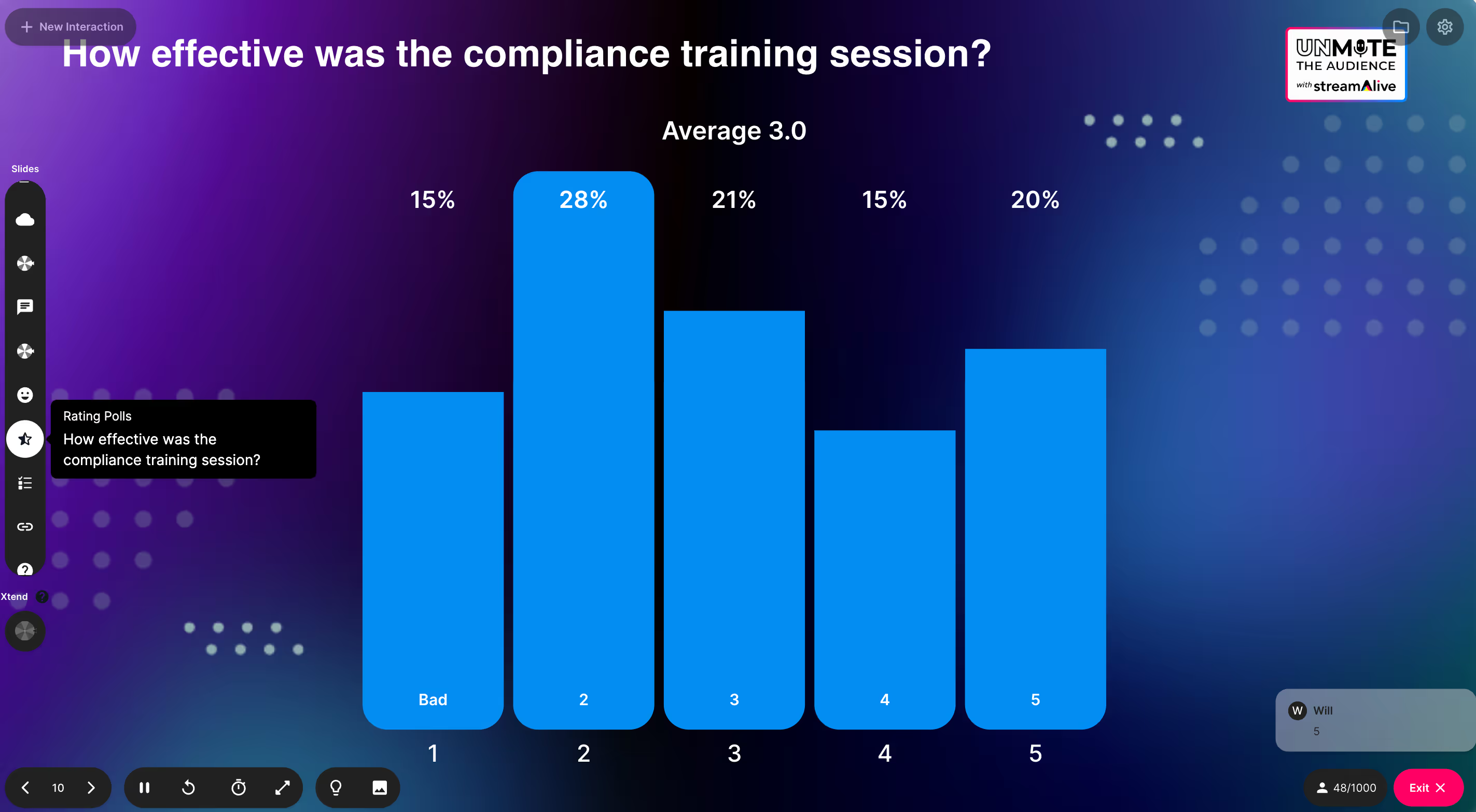
2) Rating Polls: Do a quick pulse check without putting anyone on the spot
For Mental Health & Wellbeing Focus training, you want to gauge where the room is-without forcing anyone to overshare. Rating Polls give you a clean, low-pressure temperature check. Try these moments: - At the start: On a scale of 110, how confident are you in having a mental health conversation at work? - After you teach a framework: Rate this tool: how practical is it for your org right now? (110) - Mid-session energy check: Quick pulse: hows your focus level right now? (110) Trainer tip: call out what you see on screen-Looks like weve got a lot of 57s, cool, lets add a few phrases you can use tomorrow. Thats instant relevance.
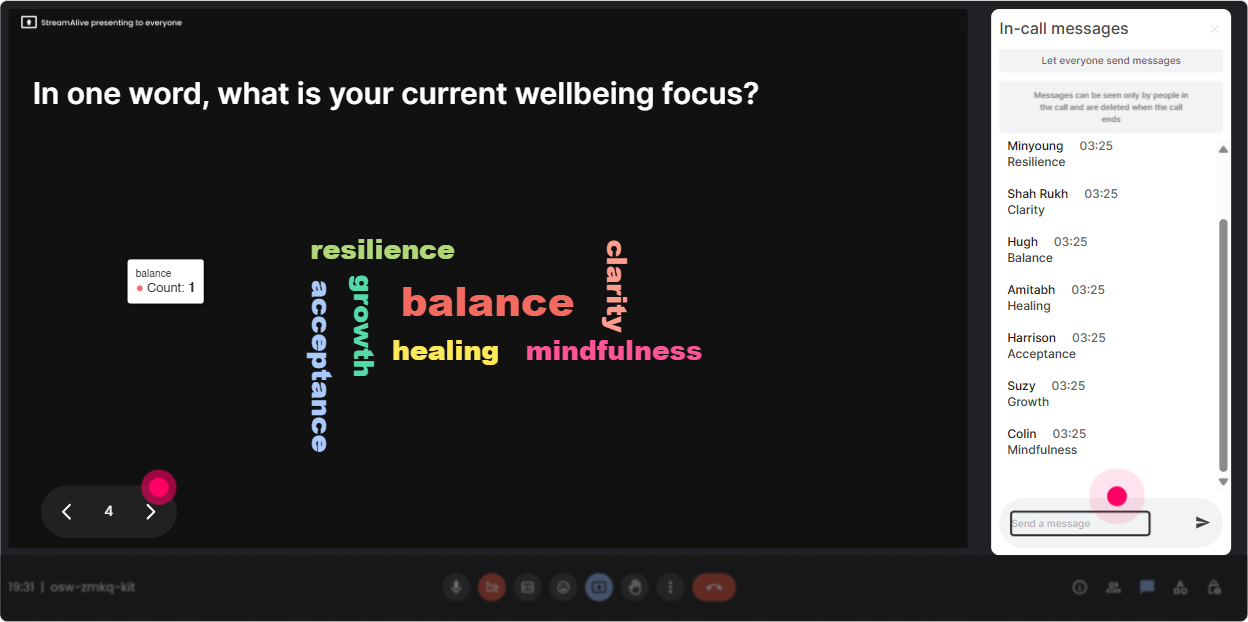
3) Wonder Words (Word Cloud): Get honest feelings fast (without a long discussion)
If you want real engagement, ask for a 12 word reaction. Wonder Words makes it visual, which is perfect for topics like stress, burnout, and psychological safety. Prompts that work really well: - When you hear workplace wellbeing, whats the first word that comes to mind? - One word for how people in your org are feeling lately? - Whats the biggest barrier to wellbeing at work? (12 words) - One word for what you wish leaders understood better about mental health? Why it works: youll immediately see patterns-burnout, overload, pressure, or maybe support and flexibility. And now youre not guessing what to focus on-youre responding to the room.
4) Talking Tiles: Let people share real situations (without making it awkward)
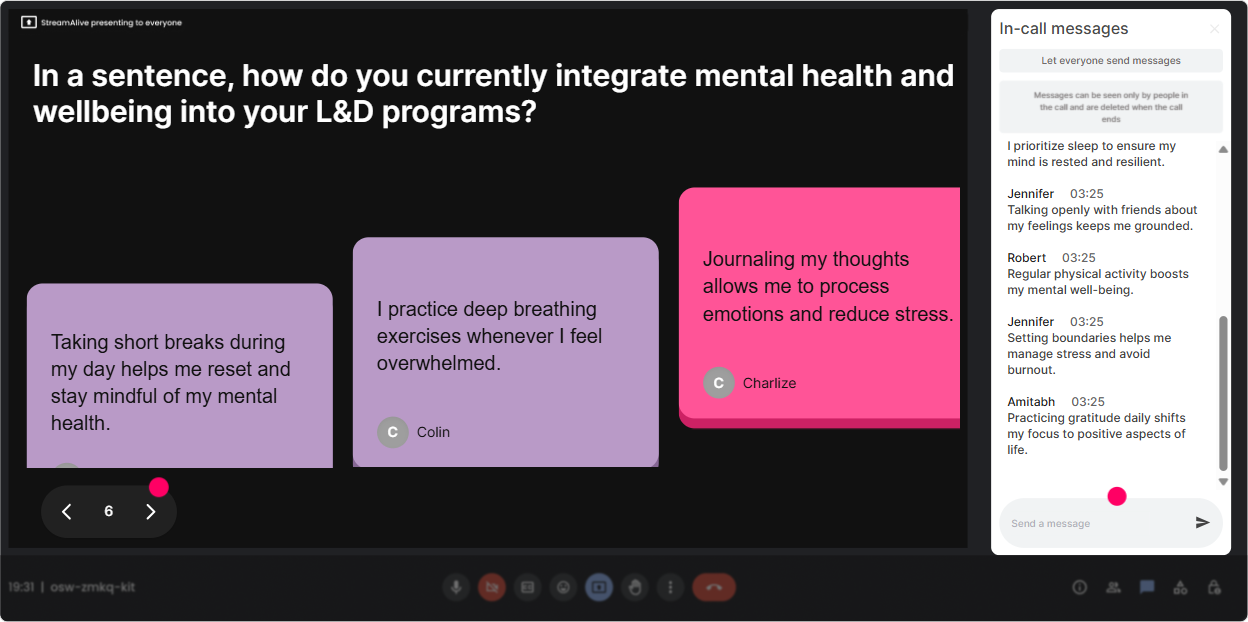
L&D Leaders love practical examples. Talking Tiles is great when you want slightly longer responses-quick stories, scenarios, or heres whats happening for us. It also makes the chat feel alive instead of buried. Use it for: - Whats one wellbeing challenge youre seeing in your teams right now? - Share a sentence youve heard that signals burnout (without naming anyone). - Whats one thing managers do that accidentally increases stress? - Finish this: A wellbeing program fails when Trainer move: read a few tiles out loud and group them-These sound like workload issues vs These are clarity and role expectation issues. Youre basically facilitating a live needs assessment while teaching.
5) Power Polls: Let the audience choose the direction (so it feels custom)
When youre training L&D Leaders, theyre always thinking: How do I apply this in my org? Power Polls help you co-create the agenda on the fly. Poll ideas for this session: - What do you want more of today? 1) Burnout prevention 2) Psychological safety 3) Manager conversation skills 4) Designing a wellbeing strategy 5) Measurement + ROI - Where does your org struggle most right now? 1) Workload 2) Boundaries 3) Culture/behavior 4) Manager capability 5) Support resources - Whats your biggest constraint? 1) Time 2) Budget 3) Manager buy-in 4) Senior leader support 5) Measuring impact Why it works: you get instant alignment, and participants feel like, Okay, this is for me, which is half the engagement battle won.

6) Winner Wheel: Get volunteers without the painful silence
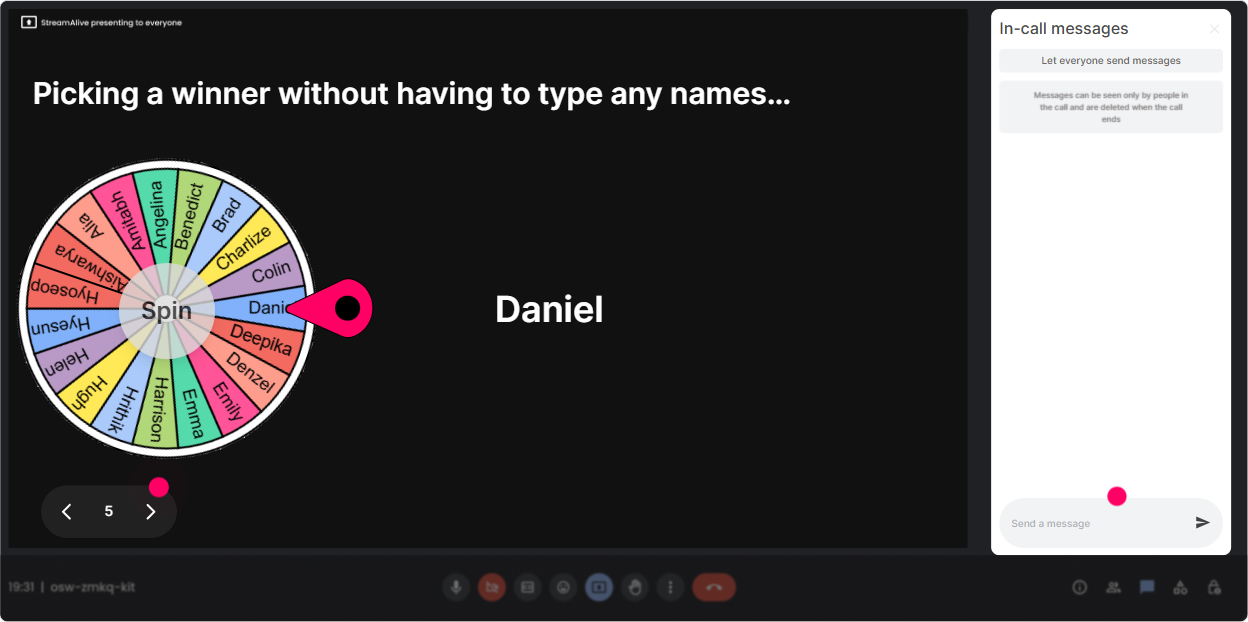
You know that moment: you ask a question and crickets. Winner Wheel fixes that in a fun, fair way-especially when you want voices in the room but dont want to pressure people. How to use it safely in a wellbeing session: - Set expectations: No pressure to share personal stuff-keep it professional and general. - Ask a light but useful prompt: Share one small wellbeing habit youve seen work on a team. - Or scenario-based: What would you say if an employee says Im not coping? Then spin from people who commented so participation is rewarded. Bonus: it nudges quieter folks to type something so theyre eligible.
7) Quiz: Turn serious topic learning into quick, sticky moments
A short quiz wakes everyone up and helps you correct myths-especially around mental health at work where assumptions are common. Quiz questions you can use: - Which is the best first step when someone shares theyre struggling? A) Give advice immediately B) Ask what support would help + listen C) Tell them to take time off D) Escalate to HR straight away (Correct: B) - Psychological safety is mostly about: A) Being nice B) Avoiding conflict C) Feeling safe to speak up without punishment D) Offering wellness perks (Correct: C) - A common early sign of burnout is: A) Better focus B) Detachment/cynicism C) Increased creativity D) More collaboration (Correct: B) Trainer tip: after revealing the correct answer, ask: What made you pick what you picked? Thats where the learning really locks in.
2) Rating Polls: Do a quick pulse check without putting anyone on the spot
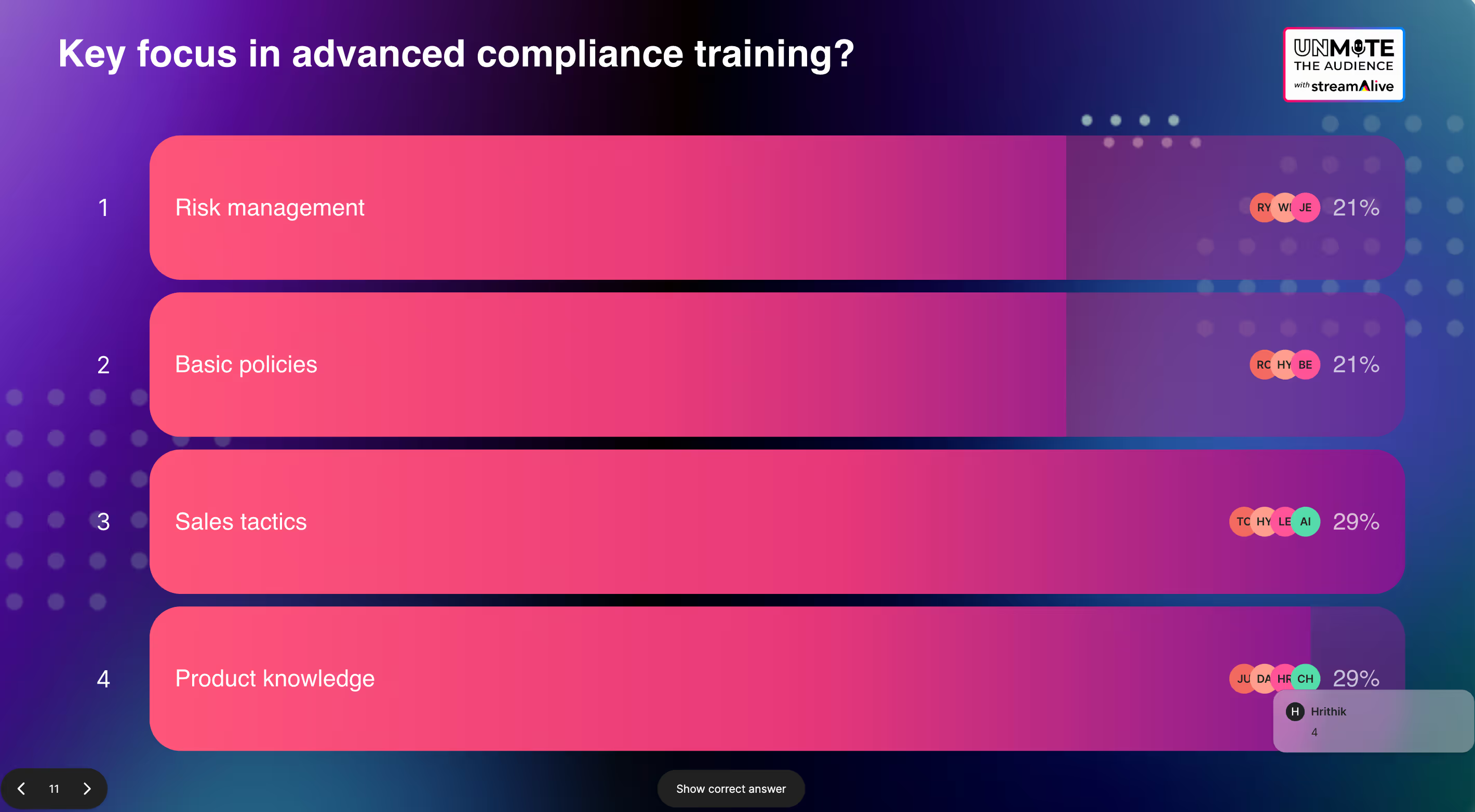
For Mental Health & Wellbeing Focus training, you want to gauge where the room is-without forcing anyone to overshare. Rating Polls give you a clean, low-pressure temperature check. Try these moments: - At the start: On a scale of 110, how confident are you in having a mental health conversation at work? - After you teach a framework: Rate this tool: how practical is it for your org right now? (110) - Mid-session energy check: Quick pulse: hows your focus level right now? (110) Trainer tip: call out what you see on screen-Looks like weve got a lot of 57s, cool, lets add a few phrases you can use tomorrow. Thats instant relevance.
8) Q&A: Capture the real questions (without losing them in the chat chaos)
In mental health and wellbeing sessions, people ask important questions but theyre often buried under comments, +1s, and side conversations. StreamAlives Q&A pulls questions out cleanly so you can actually address them. Ways to use it: - Drop your questions as we go-StreamAlive will grab them, and well do a real Q&A block at the end. - Anonymous-feeling prompts (still in chat, but less intimidating): Whats the hardest part of handling wellbeing in your org? - Practical L&D angle: What would you like a script/template for? Result: you dont miss the important stuff, and your participants feel heard-massive for trust and engagement.

9) Analytics: Prove what worked (and make your next session even better)
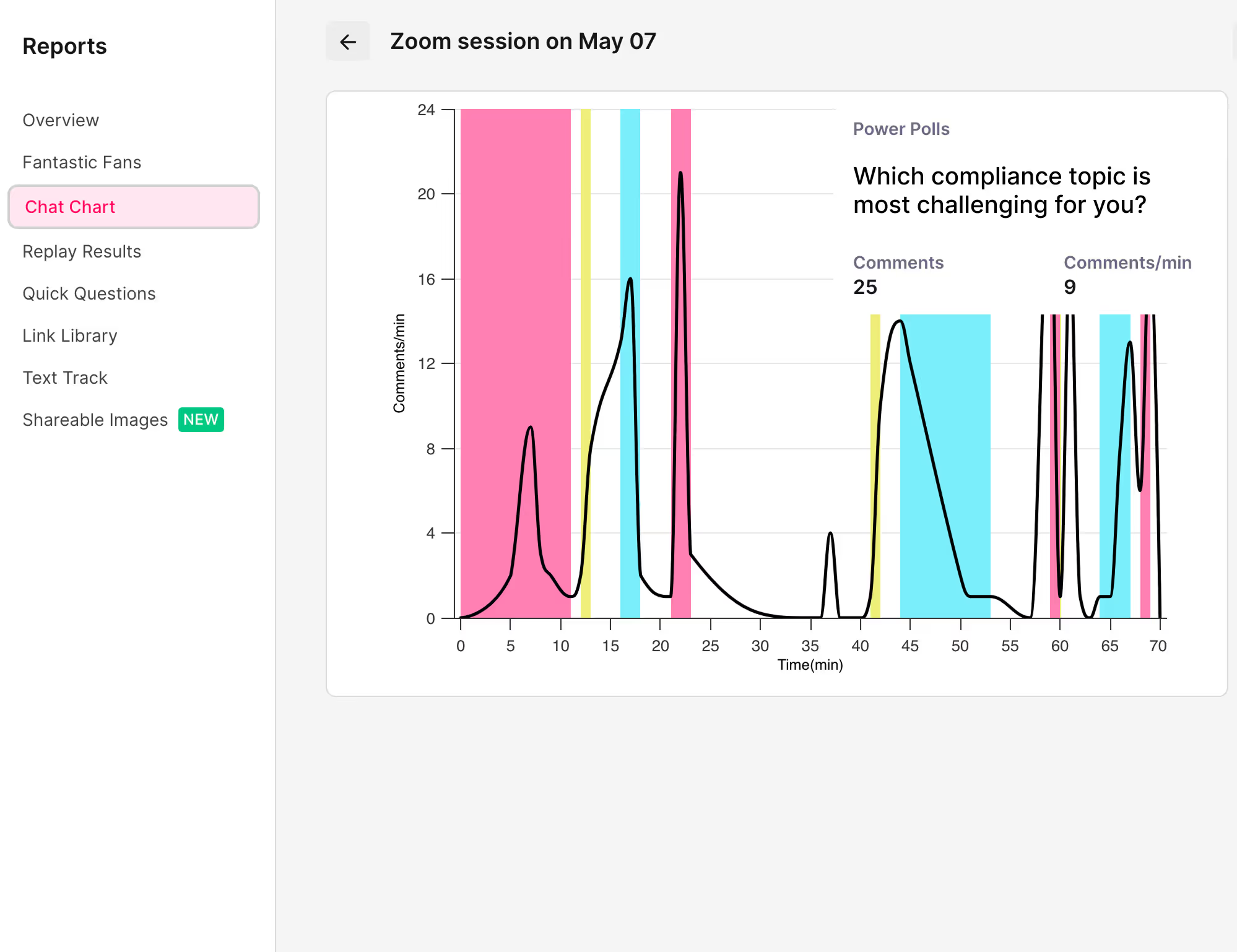
After the session, Analytics is where you get the what actually kept them engaged? answers-especially useful for L&D Leaders who care about impact, not vibes. What you can do with it: - See minute-by-minute engagement: spot where attention peaked (maybe during the burnout myth quiz) and where it dipped (maybe a lecture-heavy section). - Review interaction results: which poll options won, what themes showed up in word clouds, what questions came up most. - Identify your top engaged participants: great for follow-up, champions, or pilot groups. - Share results easily: send the interaction reports to your email or share insights with your internal team on Teams. In other words: youre not just running a nice session. Youre collecting real signals you can use to improve your facilitation-and show value to stakeholders.
Use StreamAlive in all your training sessions
StreamAlive isn’t just for
Mental Health & Wellbeing Focus
training,
it can also be used for any instructor-led training session directly inside your PowerPoint presentation.
Explore similar traingin ideas: unlocking the potential of StreamAlive
See how StreamAlive transforms live training with engaging events and interactive sessions across industries, directly inside your PowerPoint presentation.

Interactions in action
(it's free)

.svg.png)


