Install StreamAlive for your PowerPoint slides
Learn more

Systemic Thinking Training for Training Agencies
StreamAlive helps 9x the audience engagement in your Virtual Instructor-led Trainings (VILT) directly inside your powerpoint presentation.
Make your instructor-led Systemic Thinking training more fun with polls, word clouds, spinner wheels and more
Works inside your existing PowerPoint presentation
Install the StreamAlive app for PowerPoint and see your slides come to life as people participate in your interactions
AI generates audience interactions for you
Let our AI scan your presentation and automatically come up with relevant questions based on the content. Or spend two hours coming up with your own questions, your choice!
Built to work with MS Teams and Zoom
Native apps for Teams and Zoom so you never have to leave your existing workflows
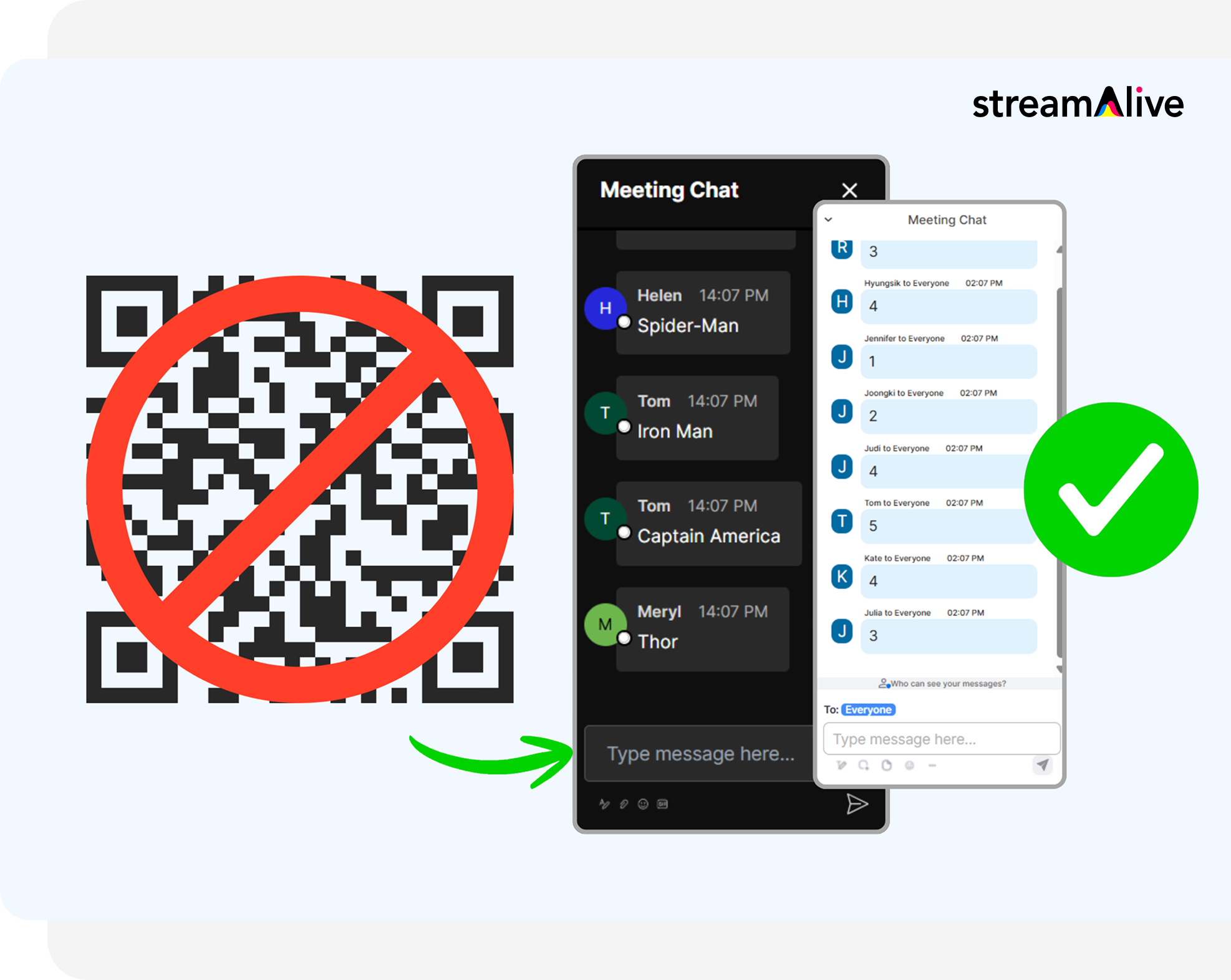
No QR Codes
Chat-powered interactions means your audience doesn’t need to scan QR codes or look at another screen to participate. They just type in the chat!
Quickly approved by your IT team
StreamAlive’s apps for Teams and Zoom means that they have been through rigorous quality assurance and client safety reviews. You’ll find everything an IT team needs to approve the app within the organization within your StreamAlive account.

Youve been asked to run a Systemic Thinking instructor-led session for a Training Agency-and you want people to actually lean in, not just nod politely on mute. The easiest way to make it engaging is to get everyone interacting early and often. Here are practical ways to teach Systemic Thinking using StreamAlive so your room feels alive (not silent).
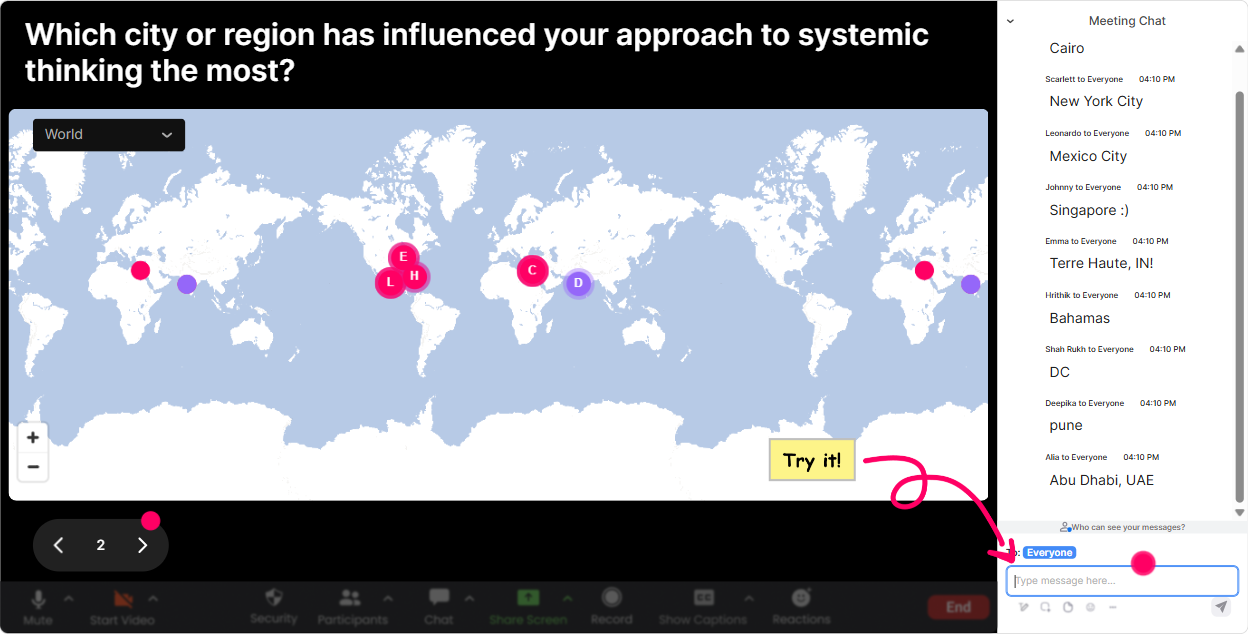
1) Magic Maps: Put your system on the map right from minute one
Systemic Thinking is all about connections, context, and seeing the whole picture-so starting with a live map is a perfect metaphor. Use Magic Maps as your opener and you instantly turn Where are you joining from? into a visual that feels like a shared system coming together. Try questions like: - Where are you joining from today? (City + country) - Name a city where youve seen training *really* change a workplace culture. - If you could visit any Training Agency in the world to learn how they do it, where would you go? - Where does your training team serve-what location do most of your learners come from? Trainer move: once the map is full, connect it back to the topic: Look-already weve got a system: different regions, different contexts, different constraints. Systemic Thinking starts exactly here.
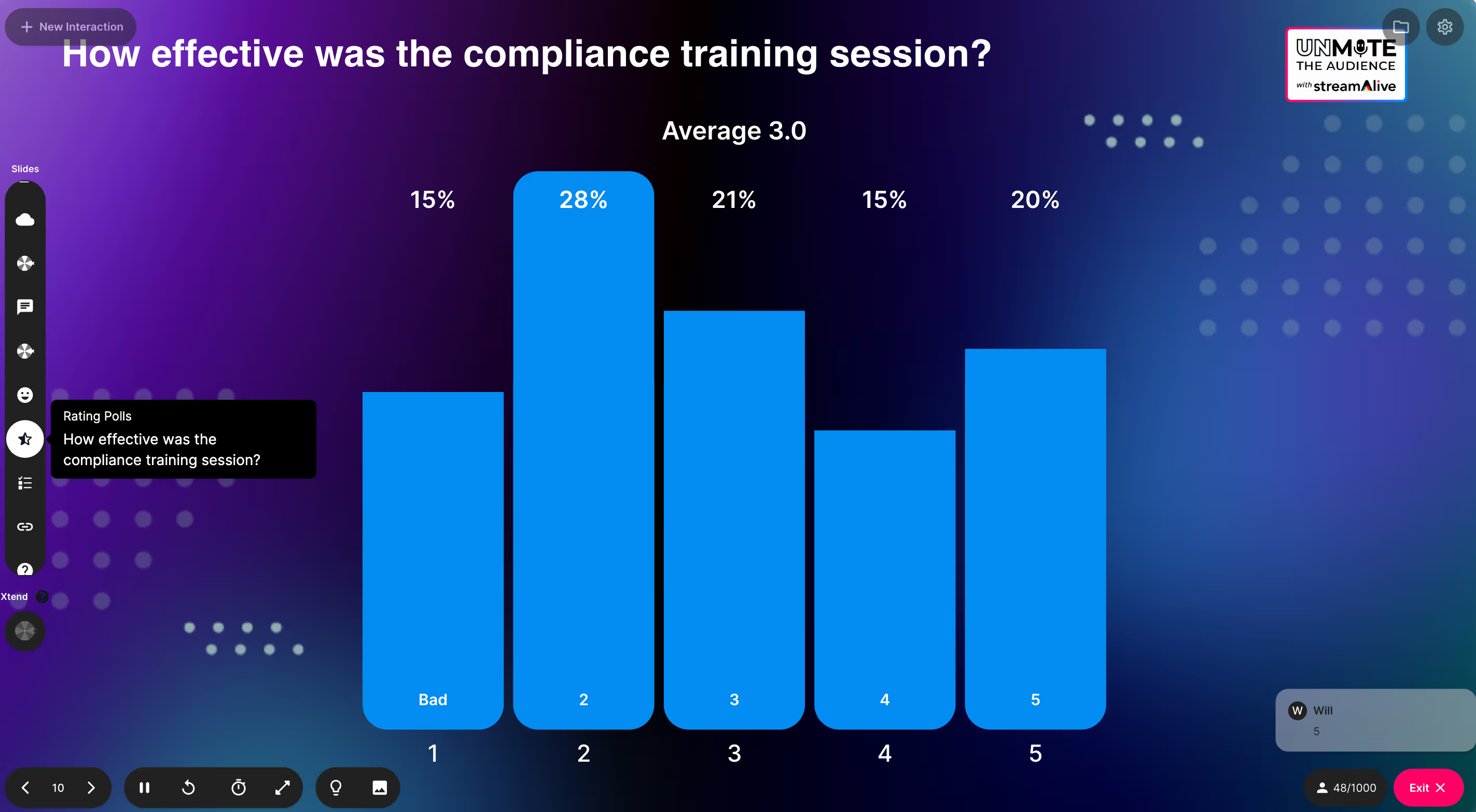
2) Rating Polls: Quick confidence check before you teach anything
Before you dive into loops, leverage points, or root causes, get a real-time pulse check. Rating Polls let you measure confidence (or confusion) without putting anyone on the spot. Use prompts like: - On a scale of 110, how confident are you with Systemic Thinking? - Rate how often your agency currently solves problems by fixing symptoms (1=never, 10=all the time). - How comfortable are you explaining feedback loops to a client? (110) Trainer move: show the live distribution and narrate it like a conversation: Okay, weve got a cluster around 46. Perfect. That tells me well go practical first, jargon later.
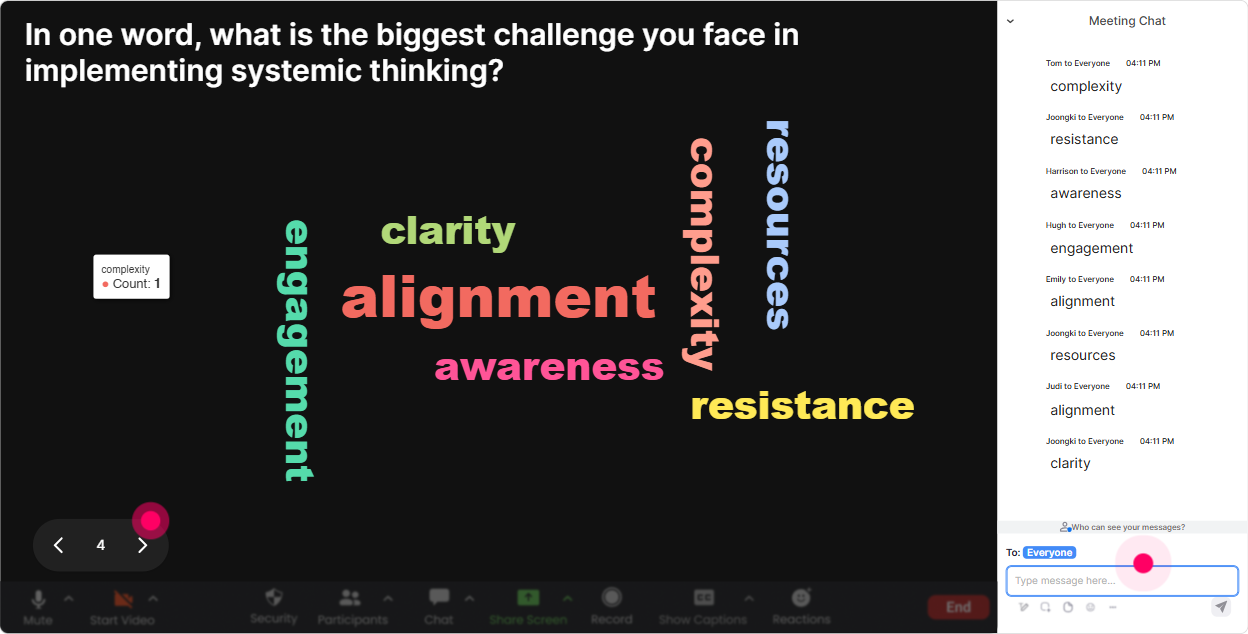
3) Wonder Words (Word Cloud): Make their mindset visible in 10 seconds
Systemic Thinking can feel abstract. A word cloud makes it emotional and real-fast. Ask for 12 word answers and youll immediately see what your group associates with the topic. Try these: - When you hear Systemic Thinking, whats the first word that comes to mind? - Whats the biggest challenge in your training projects right now? (12 words) - In one word: what usually breaks first in a training rollout? - Whats one word you want learners to feel after training? Trainer move: use the biggest words as your agenda. Looks like alignment and stakeholders are huge-great, well build our system map around those.
4) Talking Tiles: Get real stories (without forcing anyone to unmute)
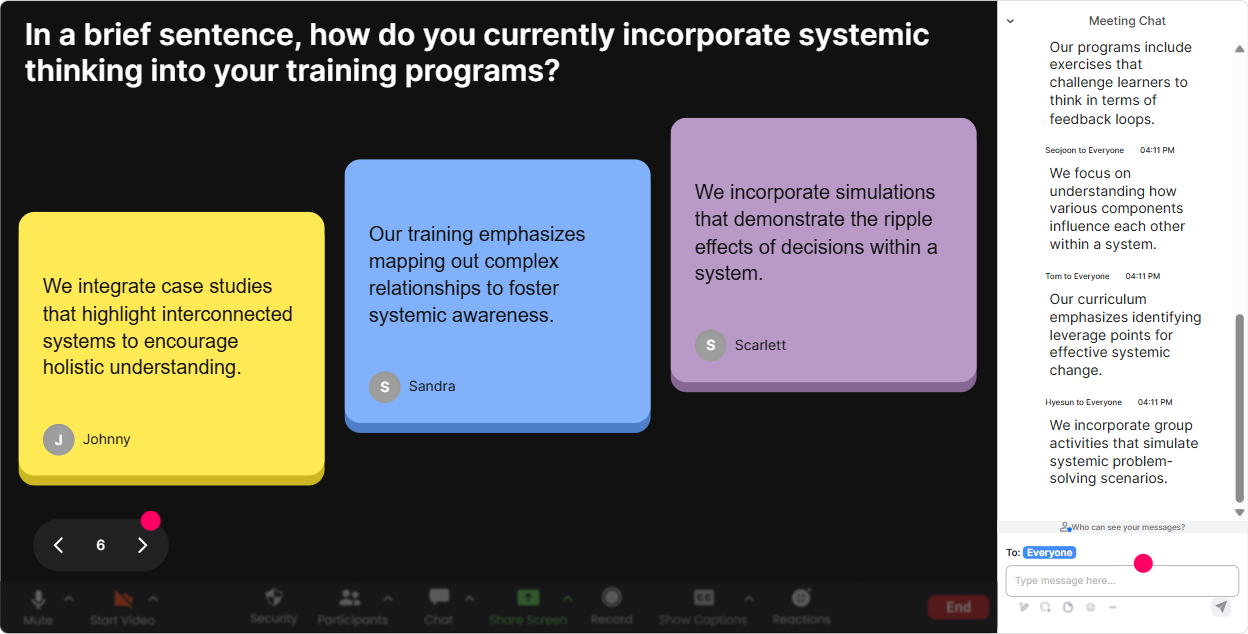
Systemic Thinking lands best when people talk about real situations-misaligned stakeholders, messy rollouts, resistance, broken handoffs. Talking Tiles is perfect because people can type a few lines and you instantly get a wall of real examples. Prompts that work really well: - Describe a training problem you fixed that came back again later. What happened? - Where does work get stuck in your agency-handoff, design, delivery, client sign-off, evaluation? - Whats one thing outside the classroom that affects training success the most? - Finish this: If we change the training, but dont change ___, nothing changes. Trainer move: pick 23 tiles and say, These are not isolated issues-these are system patterns. Lets find the loops underneath.
5) Power Polls: Let the room choose what you go deeper on
With Systemic Thinking, there are multiple directions you can go-feedback loops, causality, leverage points, systems mapping, unintended consequences. Instead of guessing what your Training Agency audience wants, let them vote and steer the session. Poll ideas (with options): - What do you want most from today? 1) Spot root causes faster 2) Map stakeholder impact 3) Prevent training that doesnt stick 4) Handle resistance + adoption - Where do you see the biggest system breakdown in training delivery? 1) Needs analysis 2) Stakeholder alignment 3) Learner engagement 4) Manager reinforcement 5) Measurement/ROI Trainer move: teach the same concept through the winning option. Example: if measurement/ROI wins, you frame feedback loops around evaluation and business outcomes.
6) Winner Wheel: Turn participation into a game (and get people talking)
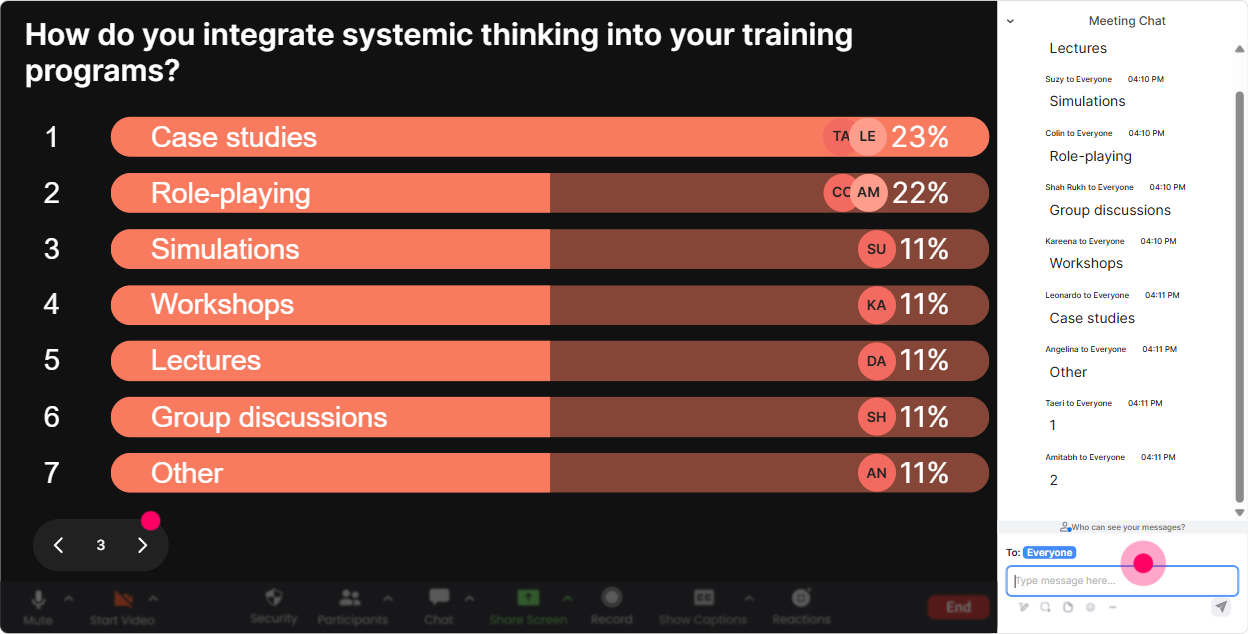
In every session, youll have a few chatty folks and a bunch of quiet geniuses. Winner Wheel helps you balance the room-because commenting becomes a way to get picked (for a fun prompt, not an awkward spotlight). Ways to use it in Systemic Thinking training: - After a Talking Tiles activity: Im going to spin the wheel and ask one person to share a 30-second version of their scenario. - After a poll: Wheel pick: tell us why you voted for that option. - During practice: Drop one leverage point youd try first. Wheel decides who explains theirs. Trainer move: make it low-pressure. Say: If you get picked and youd rather pass, just type pass-no stress. This is just to keep it lively.
7) Quiz: Quick knowledge checks that dont feel like school
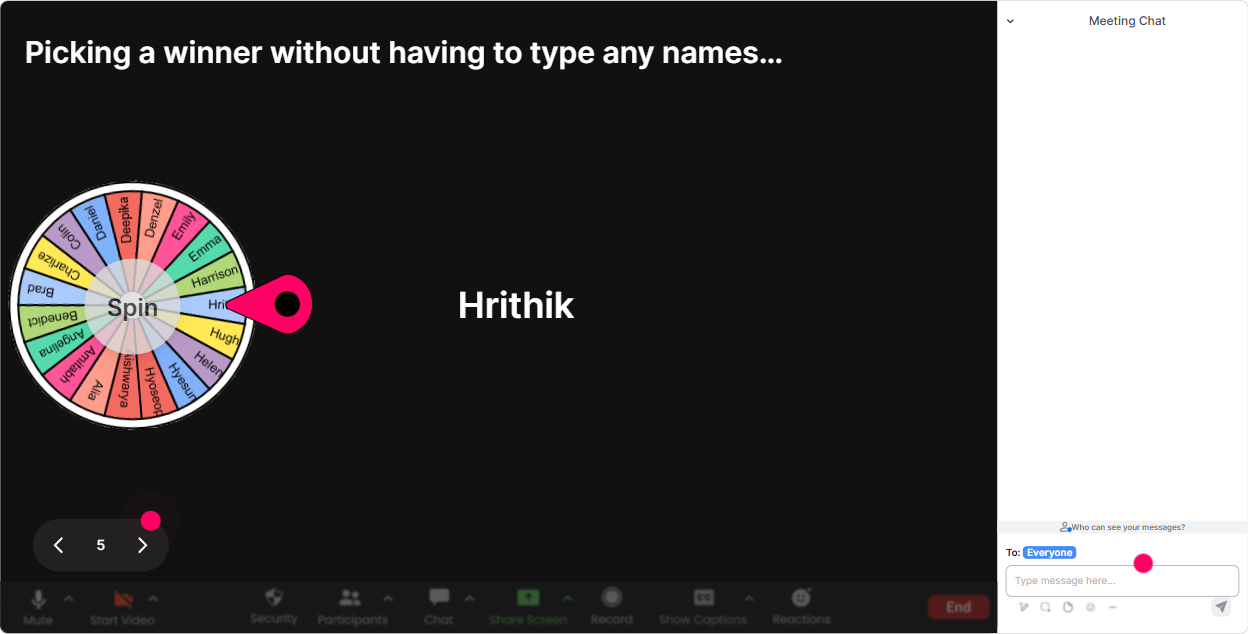
Systemic Thinking has a few concepts people *think* they understand-until you test it. A simple Quiz interaction wakes everyone up and gives you a clean teaching moment. Quiz questions you can use (multiple choice, one correct): - Whats a symptom fix most likely to do in a system? A) Solve the root cause permanently B) Improve the systems resilience C) Create unintended consequences over time (Correct) D) Remove feedback loops - Which is the best example of a feedback loop? A) Updating slides B) Learner confusion more questions slower pace less content covered more confusion (Correct) C) Sending a calendar invite D) Adding more modules Trainer move: after revealing the correct answer, ask: Where do you see this loop in your agency right now? and jump straight into application.
2) Rating Polls: Quick confidence check before you teach anything
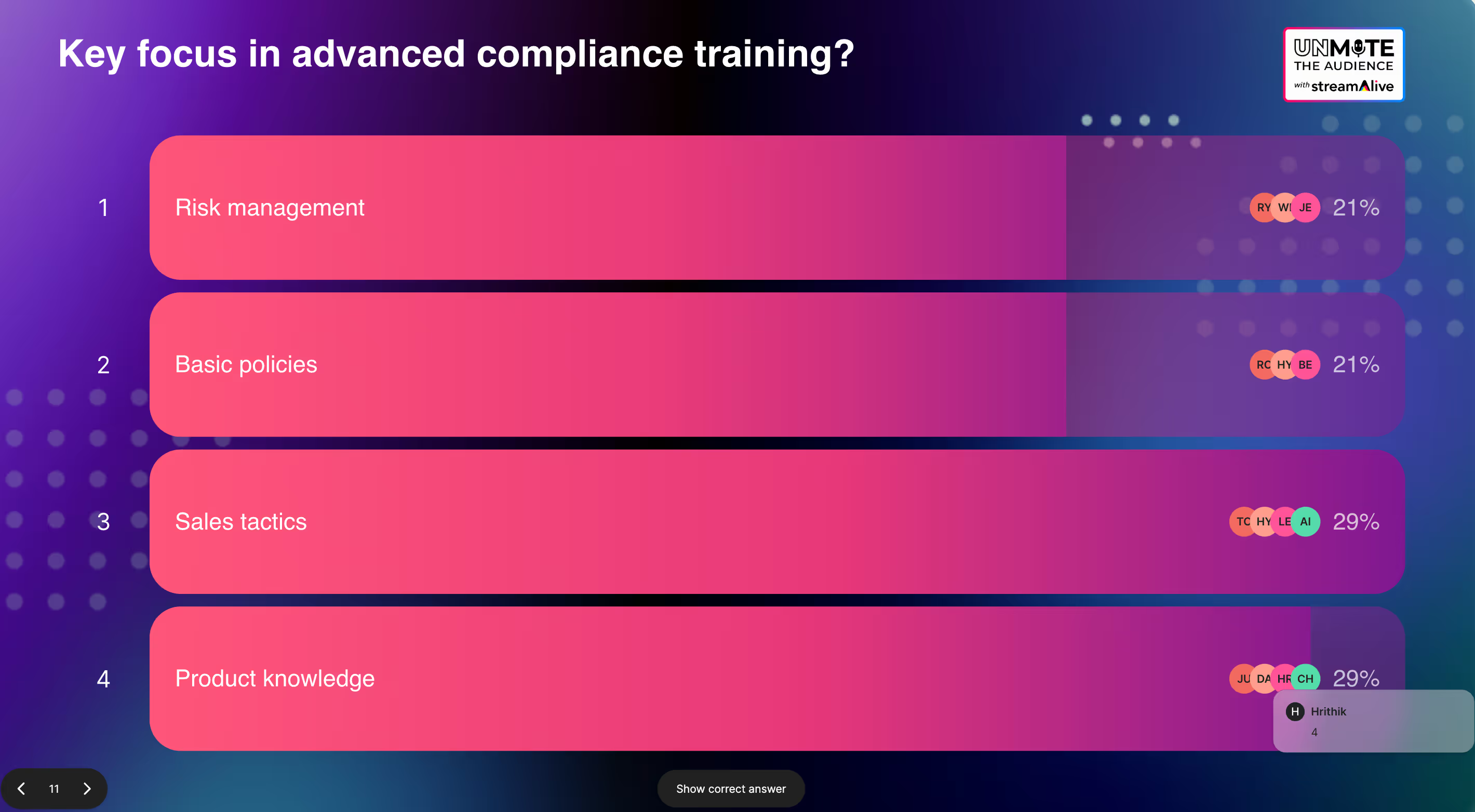
Before you dive into loops, leverage points, or root causes, get a real-time pulse check. Rating Polls let you measure confidence (or confusion) without putting anyone on the spot. Use prompts like: - On a scale of 110, how confident are you with Systemic Thinking? - Rate how often your agency currently solves problems by fixing symptoms (1=never, 10=all the time). - How comfortable are you explaining feedback loops to a client? (110) Trainer move: show the live distribution and narrate it like a conversation: Okay, weve got a cluster around 46. Perfect. That tells me well go practical first, jargon later.
8) Q&A: Capture questions as they happen (so you dont lose the good ones)
When youre teaching Systemic Thinking, questions pop up fast-especially when people start recognizing patterns in their own organization. StreamAlive Q&A pulls questions from the chat and keeps them organized, so youre not scrolling like crazy. How to use it smoothly: - Tell learners: If its a question, start your message with Q: so it gets captured. - Use mid-session Q&A breaks: Lets do a 3-question pit stop before we build our next system map. - End with: Top 5 questions lightning round. Trainer move: when you answer, link back to the system: Great question-notice how thats really about incentives and delayed effects.

9) Analytics: Improve your next delivery (and prove engagement to clients)
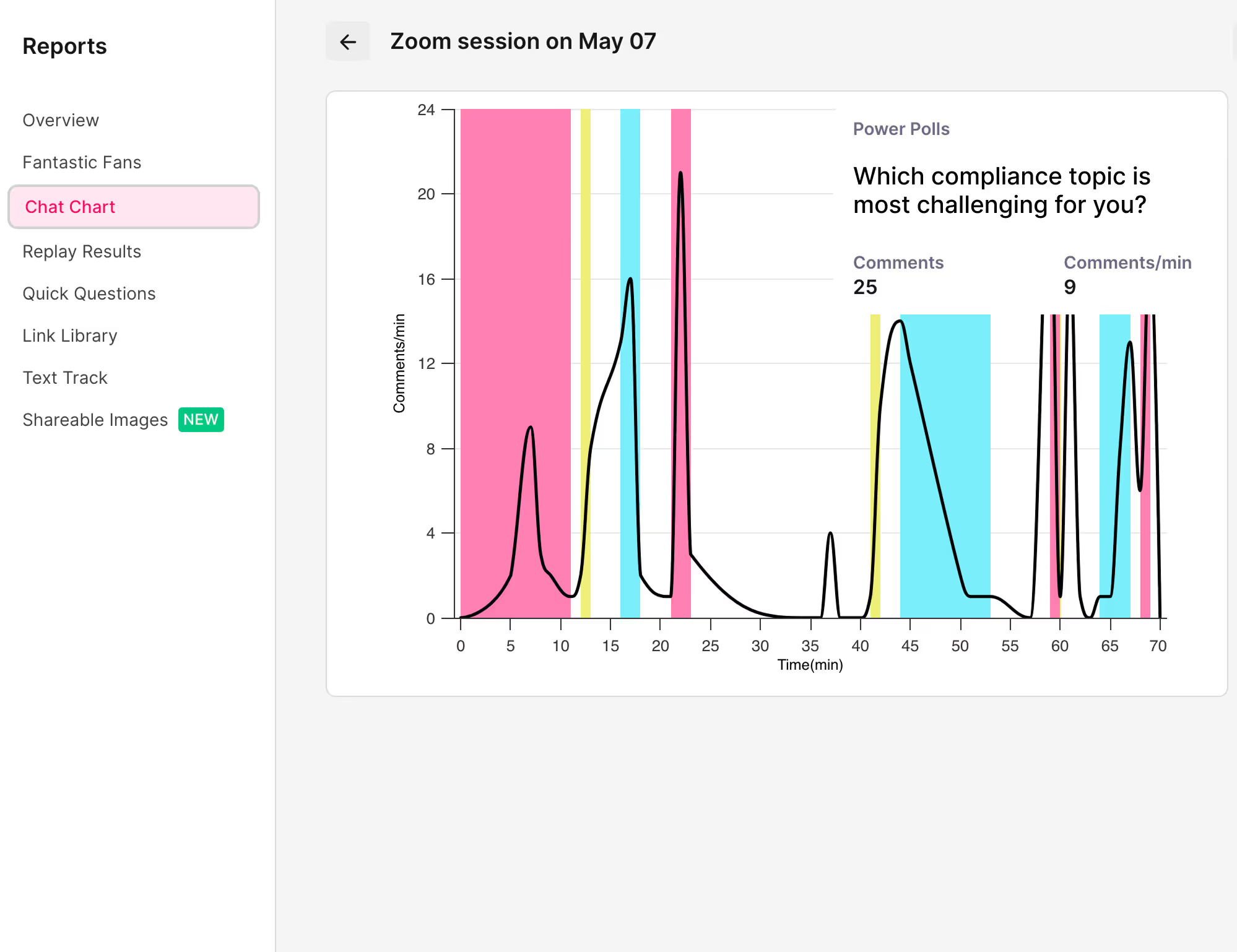
After the session, Analytics is where you get smarter. You can see what moments sparked chat, which interactions pulled people in, and who your most engaged participants were. How Training Agencies can use this: - Identify the drop moments: People went quiet during the theory section-next time Ill add a quick poll there. - Prove value to stakeholders: share interaction results (poll outcomes, word clouds) as evidence of participation. - Find your champions: see your top engaged folks (great candidates for follow-up, testimonials, or pilot groups). - Compare cohorts: if you run this training multiple times, you can see which flow drives the most interaction. Trainer move: treat analytics like your own Systemic Thinking loop-feedback adjustment better outcomes next session.
Use StreamAlive in all your training sessions
StreamAlive isn’t just for
Systemic Thinking
training,
it can also be used for any instructor-led training session directly inside your PowerPoint presentation.
Explore similar traingin ideas: unlocking the potential of StreamAlive
See how StreamAlive transforms live training with engaging events and interactive sessions across industries, directly inside your PowerPoint presentation.

Interactions in action
(it's free)

.svg.png)


